Civil Rights Movement
Motown Museum
nickname given to Motown's first headquarters, located at 2648 West Grand Boulevard in Detroit, Michigan
Overview
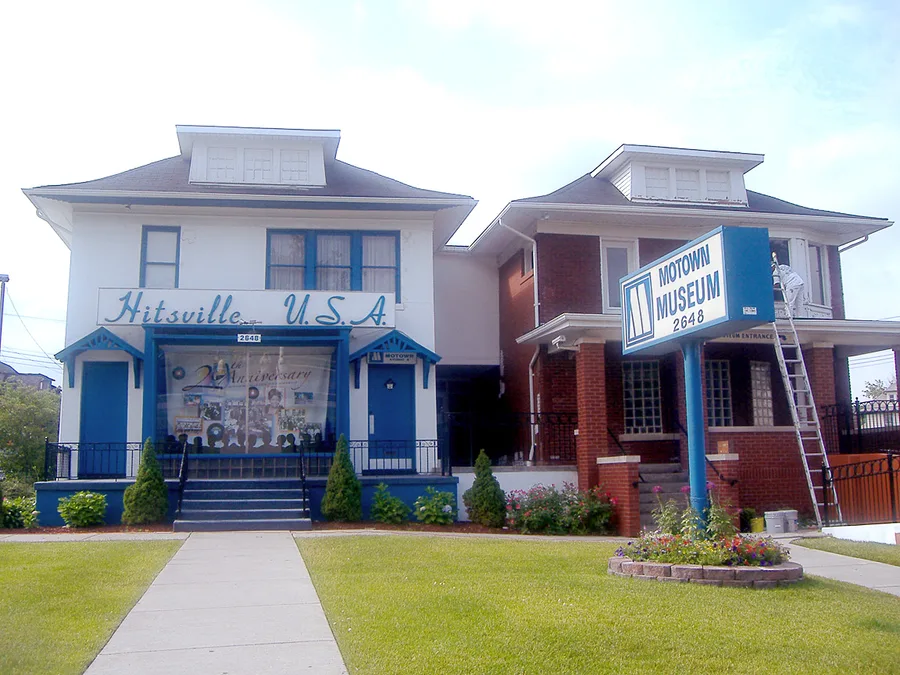
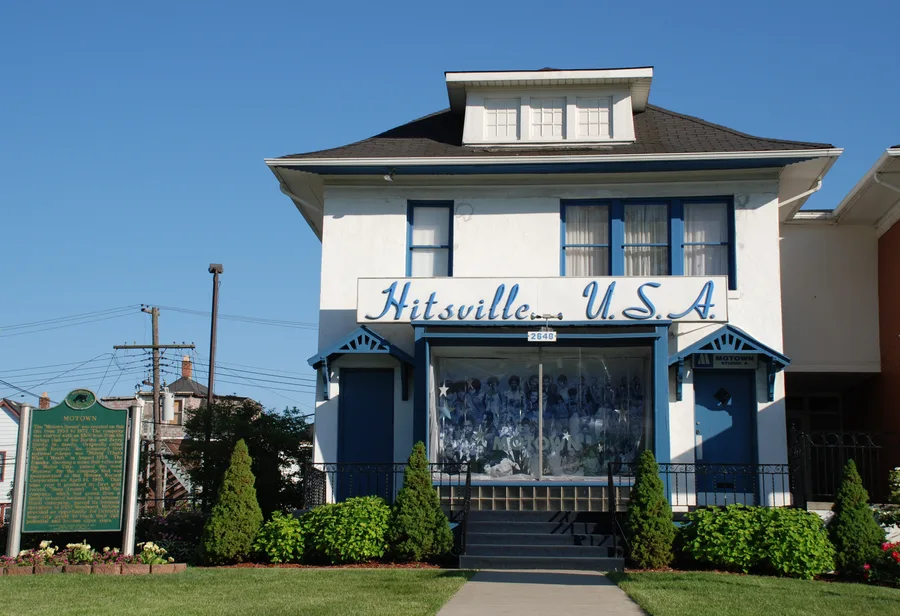
“Hitsville U.S.A.,” at 2648 West Grand Boulevard in Detroit, was Motown Records’ first headquarters and recording studio — a modest house, formerly a photography studio, that Motown founder Berry Gordy purchased in 1959 and converted into the birthplace of one of the most commercially and culturally influential record labels in American music history. The building’s small backroom recording studio operated an extraordinary 22 hours a day, closing only briefly each morning for maintenance, while the Gordy family lived on the second floor above the label’s growing operations.
A Music Empire Built House by House
As Motown’s success grew through the 1960s, the label expanded not by leaving Hitsville but by acquiring seven additional neighboring houses on the same block — a publishing office in 1961, offices for Gordy and his sister Esther Gordy Edwards in 1962, a dedicated finance department in 1965, and, in 1966, an artist development operation run by Harvey Fuqua and Maxine Powell, who personally trained Motown’s young performers in grooming, poise, and stage presence. This concentrated, block-by-block growth turned an ordinary Detroit residential street into the operational center of the sound that would define an era of American popular music.
One Employee Who Refused to Leave
By the end of 1966, Motown had grown to more than 450 employees and a gross income of $20 million, prompting Gordy to purchase additional Detroit properties, including the Donovan Building at Woodward Avenue in 1968, before relocating the label’s headquarters entirely to Los Angeles in 1972 and reorganizing it into the entertainment conglomerate Motown Industries. Many longtime fans believed Motown’s creative “golden age” ended with that move out of Detroit. Esther Gordy Edwards, Berry Gordy’s sister, refused to relocate to California and instead stayed behind to run what remained of the Detroit office inside the original Hitsville building — carefully preserving Studio A and, in response to a growing stream of visitor requests, putting up posters and gold records herself, informally founding what would become the Motown Museum years before it had an official name.
Legacy
Since 1985, the Hitsville U.S.A. building has formally operated as the Motown Museum, dedicated to the legacy of the label’s artists and music, and the museum today occupies the original house alongside an adjacent former residence, preserving the actual rooms — including the original Studio A — where a Detroit label built by a Black-owned independent company created some of the most enduring popular music in American history. The museum’s survival owes directly to Esther Gordy Edwards’s refusal to let it be abandoned when the rest of the company moved on.