Civil Rights Movement
Brown v. Board of Education National Historical Park
National Historic Site of the United States in Topeka, Kansas
Overview
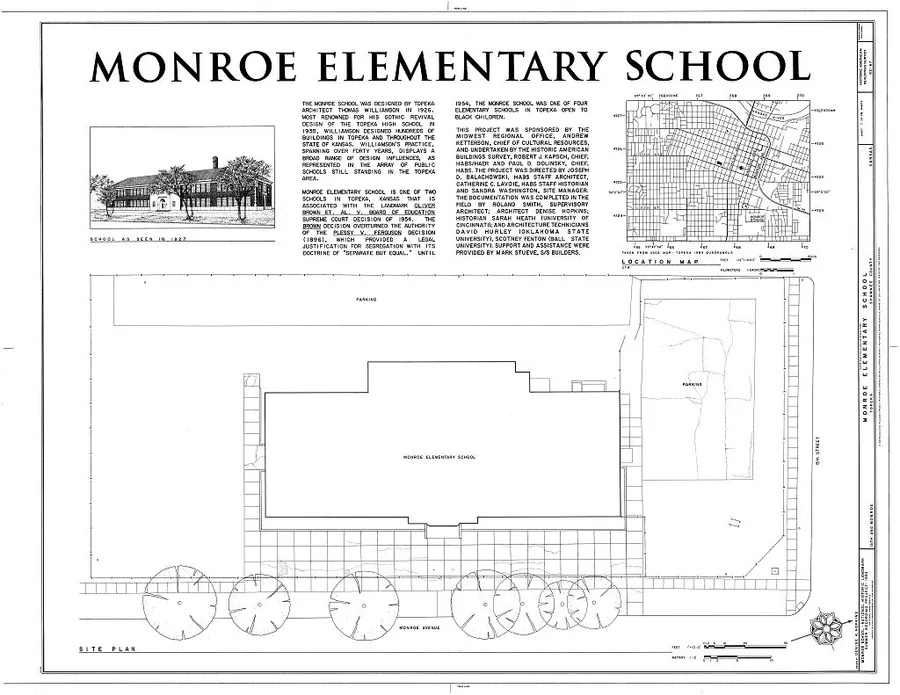
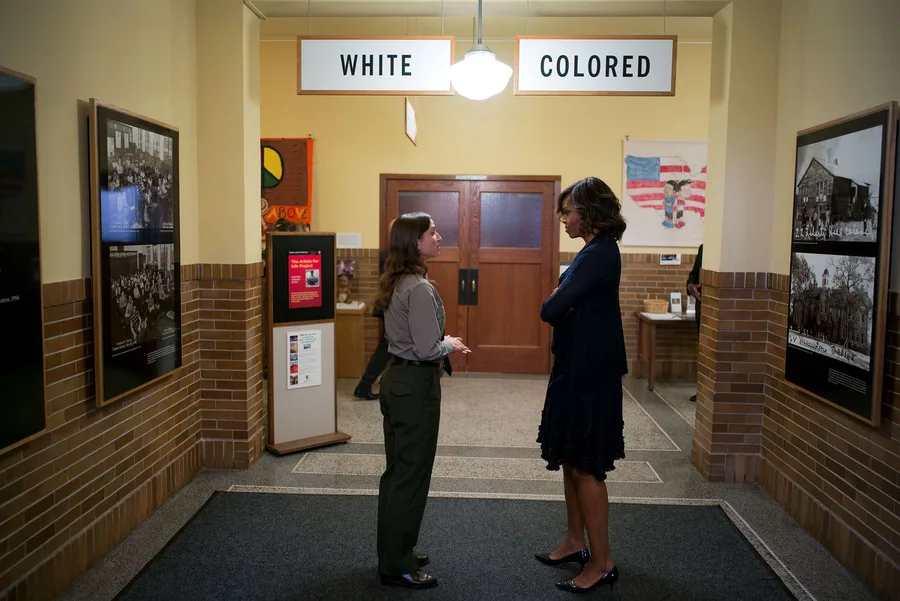
Brown v. Board of Education National Historical Park, established by Congress in Topeka, Kansas, in 1992, commemorates the U.S. Supreme Court’s landmark May 17, 1954, ruling that unanimously declared racially segregated public schools “inherently unequal” and therefore unconstitutional under the Fourteenth Amendment’s guarantee of equal protection under the law. The park centers on Monroe Elementary School, one of four segregated elementary schools that Black children in Topeka were required to attend, preserved on its original grounds as the physical site connected to the case that bears the Brown family’s name.
One Case, Five Communities
The Brown decision was in fact a consolidation of five separate lawsuits challenging school segregation across the country — Brown itself from Topeka, alongside Briggs v. Elliott from South Carolina, Davis v. County School Board of Prince Edward County from Virginia, Gebhart v. Belton from Delaware, and Bolling v. Sharpe from Washington, D.C. — meaning the ruling represented a coordinated, multi-state legal campaign against segregation rather than a single isolated case. The park was expanded and redesignated from a National Historic Site to a full National Historical Park in 2022, with plans to incorporate additional sites connected to the consolidated cases, including schools in Summerton, South Carolina, and affiliated NPS-supported sites in Virginia, Delaware, and Washington, D.C.
A School Built on an Abolitionist’s Land
Monroe Elementary’s site traces back to 1855, when abolitionist John Ritchie purchased 160 acres in Topeka; after the Civil War, newly freed Black families settled and built homes on “Ritchie’s Addition,” and the growing Black population led the school board to establish a dedicated school there. The current building, the third Monroe school on the same corner, was constructed in 1926 by prominent Topeka architect Thomas W. Williamson in the Italian Renaissance Revival style, built with some of the best materials and most modern school-construction techniques available at the time — physical evidence that undercuts any assumption that segregated Black schools were uniformly under-resourced or shoddily built. Teacher Barbara Ross recalled in a 2004 interview that Monroe’s Black teachers were highly qualified, even as supplies sometimes lagged behind what white schools received.
Legacy
By preserving and connecting the physical schools at the center of all five consolidated cases rather than only the site bearing the decision’s namesake, the National Park Service’s expanded park tells a genuinely national story of the coordinated legal strategy — built substantially by NAACP Legal Defense Fund attorneys, including future Supreme Court Justice Thurgood Marshall, profiled elsewhere on this site — that ended legal school segregation nationwide. Brown v. Board stands as one of the most consequential legal victories in American history, and this park exists specifically to preserve the ordinary elementary school buildings where that victory’s real, everyday stakes played out.
Related
- Bayard Rustin
- Fannie Lou Hamer
- Martin Luther King Jr.
- Rosa Parks
- Thurgood Marshall
- Dexter Avenue King Memorial Baptist Church
More in Civil Rights, Education