Civil Rights Movement
Thurgood Marshall
Associate Justice of the Supreme Court of the United States from 1967 to 1991 (1908–1993)
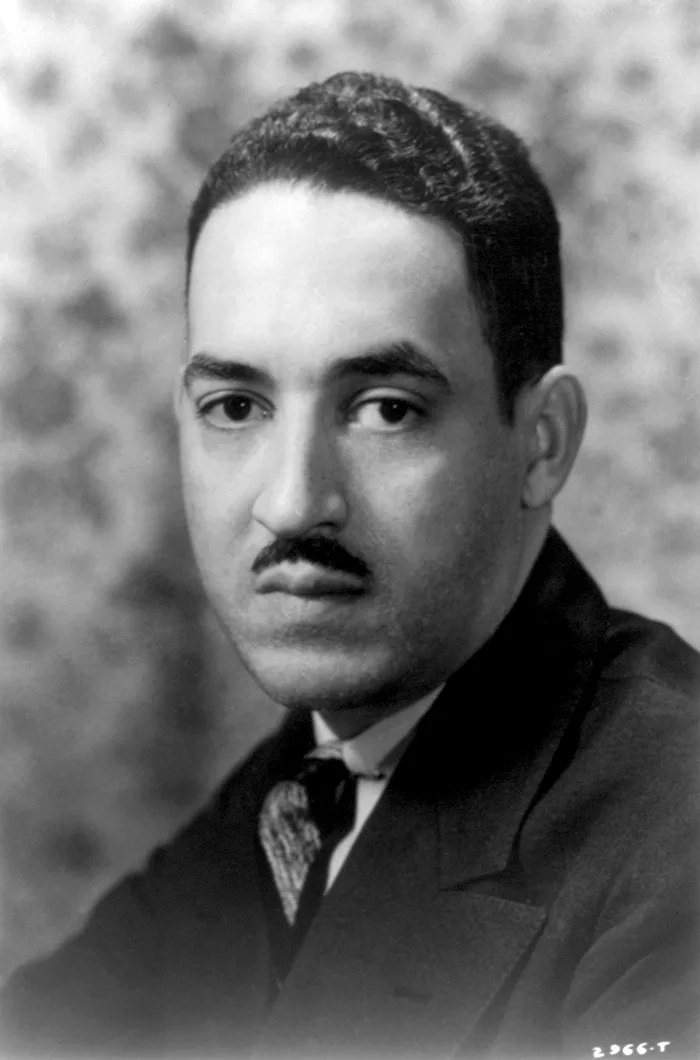
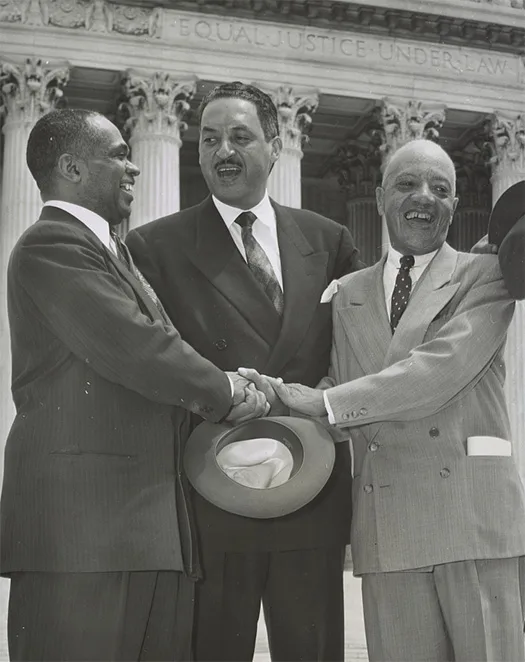
Overview
Thurgood Marshall, born in Baltimore in 1908, became the first African American justice of the U.S. Supreme Court, serving from 1967 to 1991, capping a legal career that had already reshaped American civil rights law before he ever took the bench. At Howard University School of Law, Marshall was mentored by Charles Hamilton Houston, who taught his students to become “social engineers” willing to use the law itself as a direct tool for civil rights advancement — a philosophy that defined Marshall’s entire subsequent career.
29 of 32 Supreme Court Victories
As director-counsel of the NAACP Legal Defense and Educational Fund, Marshall argued 32 civil rights cases before the Supreme Court and won 29 of them, an extraordinary record culminating in the Court’s landmark 1954 decision in Brown v. Board of Education, which struck down “separate but equal” and declared segregated public education unconstitutional. Marshall’s litigation strategy deliberately incorporated sociological data to demonstrate that segregation was inherently unequal in practice, not merely in theory — an evidence-based legal approach that shaped civil rights litigation strategy for decades afterward, deployed across landmark cases including Smith v. Allwright, Sweatt v. Painter, and Shelley v. Kraemer.
From Solicitor General to the Supreme Court
President Kennedy first appointed Marshall to the U.S. Court of Appeals for the Second Circuit in 1961; President Johnson then made him U.S. Solicitor General in 1965 before nominating him to the Supreme Court in 1967, where he was confirmed 69–11 over Southern senators’ objections. On the Court, Marshall developed a “sliding-scale” approach to the Equal Protection Clause that called for flexible judicial balancing rather than rigid categorical tests, opposed the death penalty as cruel and unusual punishment so consistently that he and ally Justice William J. Brennan Jr. dissented in more than 1,400 cases where the majority declined to review a death sentence, and supported robust First Amendment and abortion-rights protections in decisions including Roe v. Wade.
Legacy
Marshall served as a consistent liberal voice on civil rights and individual liberties as the Court’s composition grew more conservative around him following Nixon-era appointments, frequently dissenting rather than moderating his positions, before retiring in 1991 and dying in 1993. Marshall’s career — a direct line from courtroom litigator dismantling segregation case by case to the first Black Supreme Court justice serving nearly a quarter-century on the bench — stands as one of the most consequential individual legal careers in American civil rights history, embodying Houston’s “social engineer” philosophy at the highest level of the American legal system.
Related
- Bayard Rustin
- Fannie Lou Hamer
- Martin Luther King Jr.
- Rosa Parks
- Brown v. Board of Education National Historical Park
- Dexter Avenue King Memorial Baptist Church
More in Civil Rights, Politics, Military