Civil Rights Movement
Bayard Rustin
American civil rights activist (1912–1987)
Overview
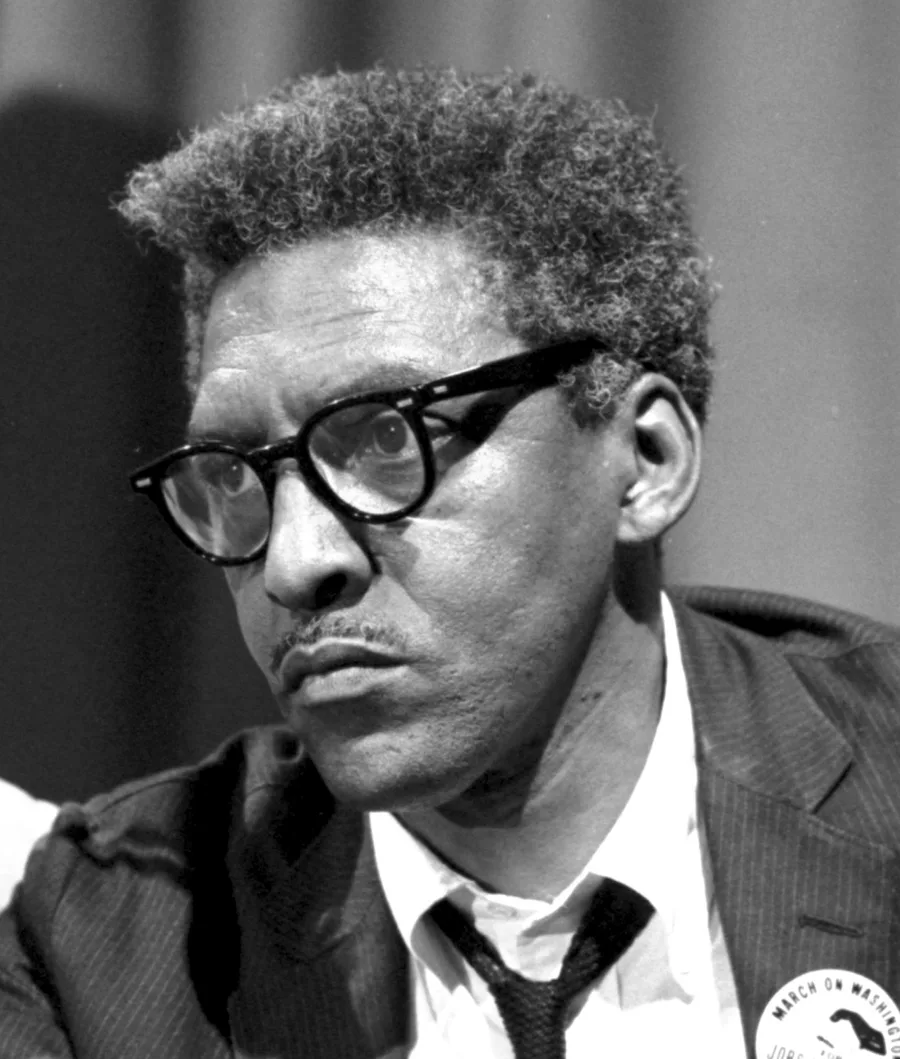
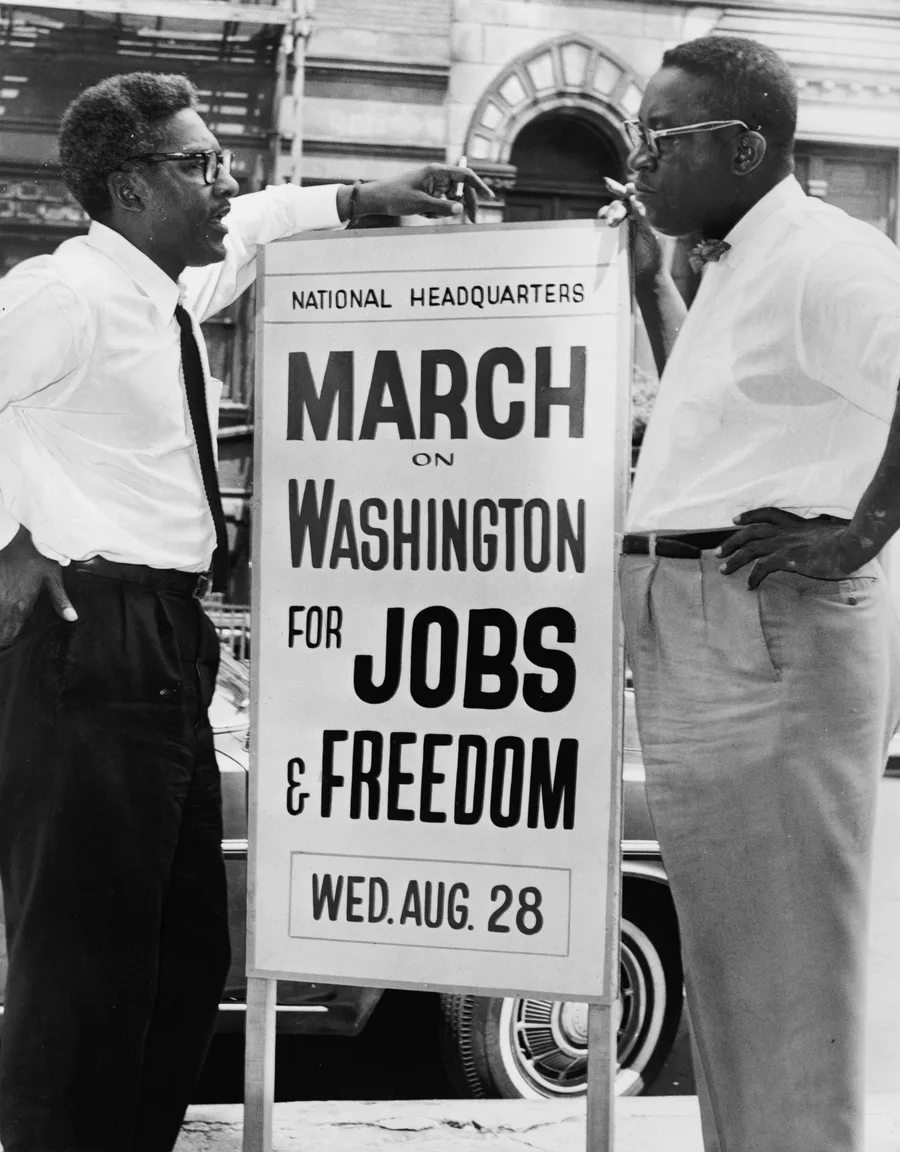
Bayard Rustin, born in 1912, served as the principal organizer of the 1963 March on Washington for Jobs and Freedom — the strategic and logistical mind behind one of the largest and most consequential demonstrations in American history — after decades of civil rights organizing that began in 1941 working alongside A. Philip Randolph on the March on Washington Movement to fight discrimination in the military and defense industry. Rustin went on to organize Freedom Rides, helped establish the Southern Christian Leadership Conference, and personally mentored Martin Luther King Jr. in the philosophy and practical strategy of nonviolent resistance.
Raised by Quaker Grandparents Who Hosted Du Bois
Rustin was raised by his maternal grandparents in West Chester, Pennsylvania — believing for years that his biological mother was actually his older sister — in a household shaped directly by civil rights leadership: his grandmother Julia Rustin was a practicing Quaker and NAACP member whose home regularly hosted NAACP leaders including W.E.B. Du Bois and James Weldon Johnson, exposing Rustin to organized civil rights activism from childhood. When a young Rustin told his grandmother he preferred spending time with boys rather than girls, she responded simply, “I suppose that’s what you need to do” — an early, documented moment of acceptance that shaped his later willingness, decades afterward, to live and eventually organize openly as a gay man.
A Leader Working Behind the Scenes
As an openly gay man in an era of intense, often violent homophobia, Rustin faced sustained criticism over his sexuality that led him, for much of his career, to advise other civil rights leaders from behind the scenes rather than claim public credit commensurate with his actual strategic role — a documented cost of homophobia within and beyond the movement he helped lead. Before the Montgomery bus boycott, Rustin helped organize a support network called “In Friendship” to provide material and legal aid to tenant farmers threatened with eviction, and he later led the AFL-CIO’s A. Philip Randolph Institute, working to integrate all-white labor unions and expand Black union membership.
Legacy
In the 1980s Rustin became a public advocate for gay rights, finally speaking openly as an activist on causes connected to his own identity after decades of enforced discretion, even as his broader political views shifted toward neoconservatism later in life. Rustin’s contributions were formally recognized posthumously when President Barack Obama awarded him the Presidential Medal of Freedom in 2013 — decades-overdue public credit for the organizer whose logistical genius made the March on Washington, and King’s own nonviolent strategy, possible in the first place.
Related
- Fannie Lou Hamer
- Martin Luther King Jr.
- Rosa Parks
- Thurgood Marshall
- Brown v. Board of Education National Historical Park
- Dexter Avenue King Memorial Baptist Church
More in Civil Rights, Politics