Civil Rights Movement
Martin Luther King Jr.
American Baptist minister and civil rights leader (1929–1968)
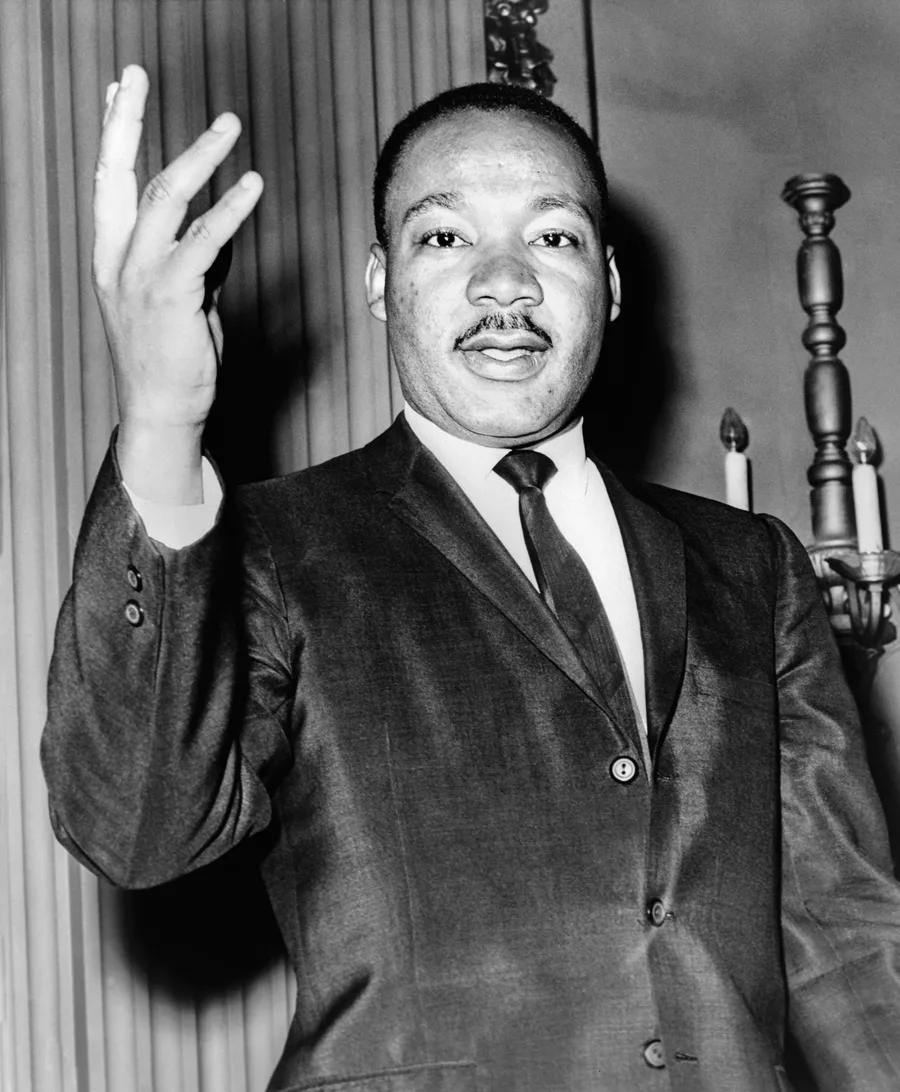
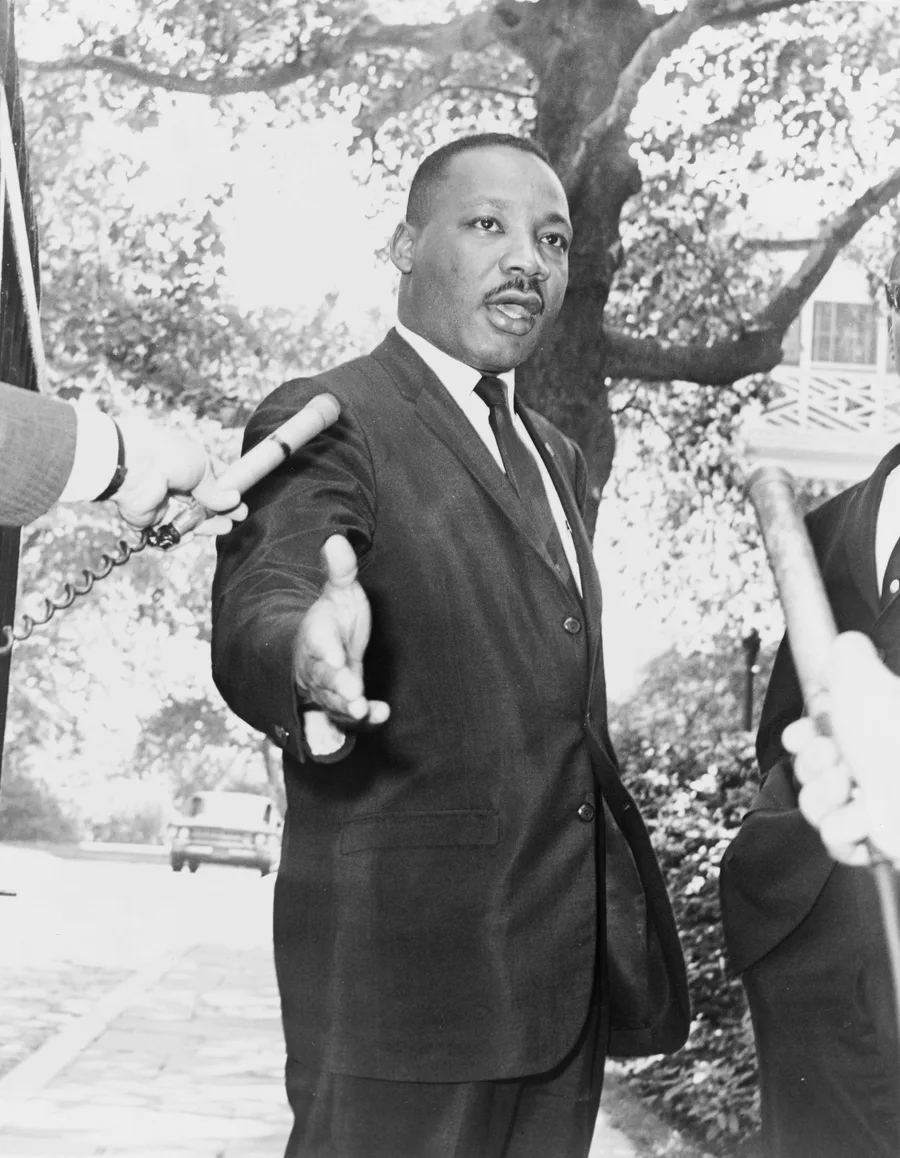
Overview
Martin Luther King Jr., born Michael King Jr. in 1929, became the preeminent leader of the American civil rights movement from 1955 until his assassination in 1968, advancing civil rights through sustained, disciplined nonviolent resistance against Jim Crow segregation and legalized discrimination. As a Black Baptist minister, King oversaw the 1955 Montgomery bus boycott, became the first president of the Southern Christian Leadership Conference, and led major campaigns including the 1963 Birmingham protests and the 1965 Selma voting rights marches, sustaining a movement built on direct action in the face of frequently violent segregationist resistance.
“I Have a Dream” and Legislative Victory
King was one of the principal leaders of the 1963 March on Washington, where he delivered his “I Have a Dream” speech to roughly 250,000 people, and his movement’s sustained pressure produced three landmark federal laws within five years: the Civil Rights Act of 1964, the Voting Rights Act of 1965, and the Fair Housing Act of 1968 — legislative achievements documented in full on this site’s own Civil Rights Movement page. King was jailed multiple times over the course of his activism and won the 1964 Nobel Peace Prize for his nonviolent campaign against racial inequality, international recognition of a movement still very much underway.
Born Into Ebenezer’s Own History
King was born Michael King Jr. in Atlanta on January 15, 1929, in his maternal grandparents’ home above the church his grandfather Adam Daniel Williams pastored, Ebenezer Baptist Church, profiled elsewhere on this site; his father, born to sharecroppers in Stockbridge, Georgia, and likely of Mende (Sierra Leone) descent, enrolled at Morehouse College to enter the ministry himself and became Ebenezer’s assistant pastor shortly after marrying King’s mother. King therefore grew up literally inside the institution he would later lead as co-pastor and that would host his own funeral — a family and church lineage spanning three generations in the same Atlanta sanctuary.
Government Surveillance and Legacy
FBI Director J. Edgar Hoover considered King a dangerous radical and made him a direct target of COINTELPRO surveillance from 1963 onward, investigating him for alleged communist ties, monitoring his personal life, and secretly recording him; in 1964 the FBI mailed King an anonymous letter he interpreted as an attempt to pressure him toward suicide — a documented government campaign against a Nobel Peace Prize-winning civil rights leader that this site records plainly as part of the movement’s real cost. In his final months, King was organizing the Poor People’s Campaign, a planned national occupation of Washington, D.C. to confront poverty directly, when he was assassinated in Memphis on April 4, 1968; his death triggered riots in cities nationwide, and he was posthumously awarded the Presidential Medal of Freedom in 1977 and the Congressional Gold Medal in 2003, with a national holiday first observed federally in 1986 and a memorial dedicated on the National Mall in 2011.
Related
- Bayard Rustin
- Fannie Lou Hamer
- Rosa Parks
- Thurgood Marshall
- Brown v. Board of Education National Historical Park
- Dexter Avenue King Memorial Baptist Church
More in Literature, Civil Rights, Politics, Religion