Civil Rights Movement
Little Rock Central High School National Historic Site
historic school in Little Rock, Arkansas, USA
Overview
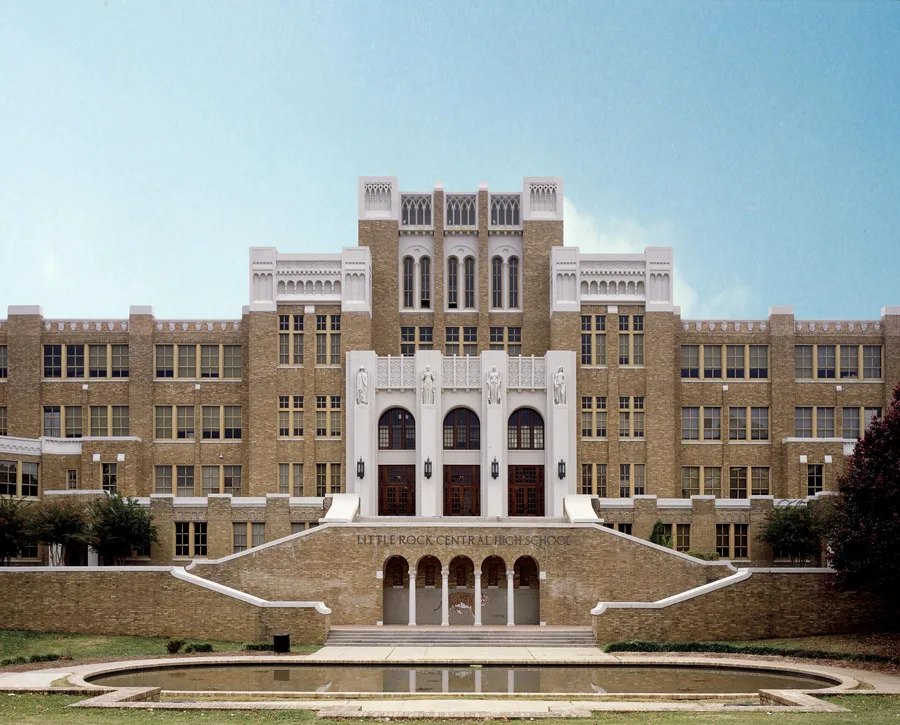
Little Rock Central High School, completed in 1927 at a cost of $1.5 million as the nation’s largest and most expensive high school facility at the time, became the site of one of the Civil Rights Movement’s most pivotal confrontations in 1957, when nine Black students — the Little Rock Nine — attempted to enroll following the Supreme Court’s 1954 ruling that segregated public schools were unconstitutional. The school, previously restricted to white students only since its founding, sits at the intersection of streets now named Little Rock Nine Way and Daisy L. Gatson Bates Drive, honoring the Black journalist and NAACP state president who led the effort to integrate the school.
The Little Rock Crisis
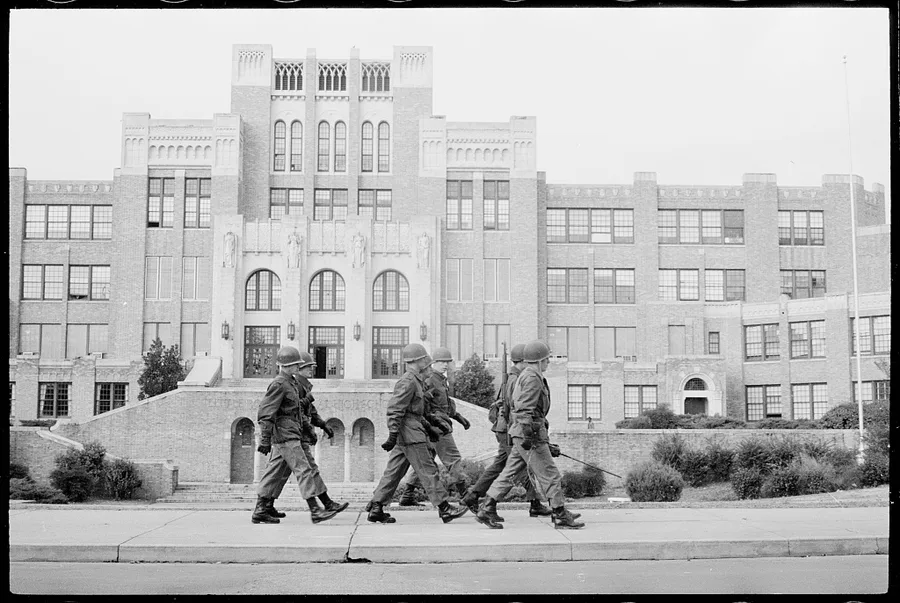
Arkansas Governor Orval Faubus’s attempt to block the Little Rock Nine’s enrollment with the state National Guard forced a direct federal-state constitutional confrontation, resolved only when President Dwight Eisenhower federalized the Arkansas National Guard and deployed the 101st Airborne Division to physically escort the nine students into the building — a rare, direct use of federal military force to enforce a civil rights court ruling against a defiant state government. The crisis became one of the most visible, internationally covered tests of whether Brown v. Board of Education’s desegregation mandate would actually be enforced on the ground.
“The Most Beautiful High School in the Nation”
When it opened in 1927 as Little Rock Senior High School, the Gothic Revival building was hailed as the largest, most expensive, and most beautiful high school in the country, drawing nearly 20,000 people to its dedication ceremony; statues above its front entrance representing ambition, personality, opportunity, and preparation still watch over the same doors the Little Rock Nine walked through three decades later. The school was renamed Little Rock Central High School in 1953, the year before Brown v. Board of Education made its whites-only enrollment policy unconstitutional.
Legacy
Little Rock Central High School remains an active, accredited public high school today, enrolling more than 2,400 students, now listed on the National Register of Historic Places and designated a National Historic Landmark in recognition of its pivotal role in the desegregation struggle. The building’s continued operation as a functioning, integrated public school is itself the crisis’s lasting legacy: what nine Black teenagers risked their safety to secure in 1957 — the basic right to attend the school nearest them — remains a functioning reality at the same building today.
Related
- Bayard Rustin
- Fannie Lou Hamer
- Martin Luther King Jr.
- Rosa Parks
- Thurgood Marshall
- Brown v. Board of Education National Historical Park
More in Civil Rights, Education