Harlem Renaissance
Duke Ellington
American jazz pianist and composer (1899–1974)
Overview
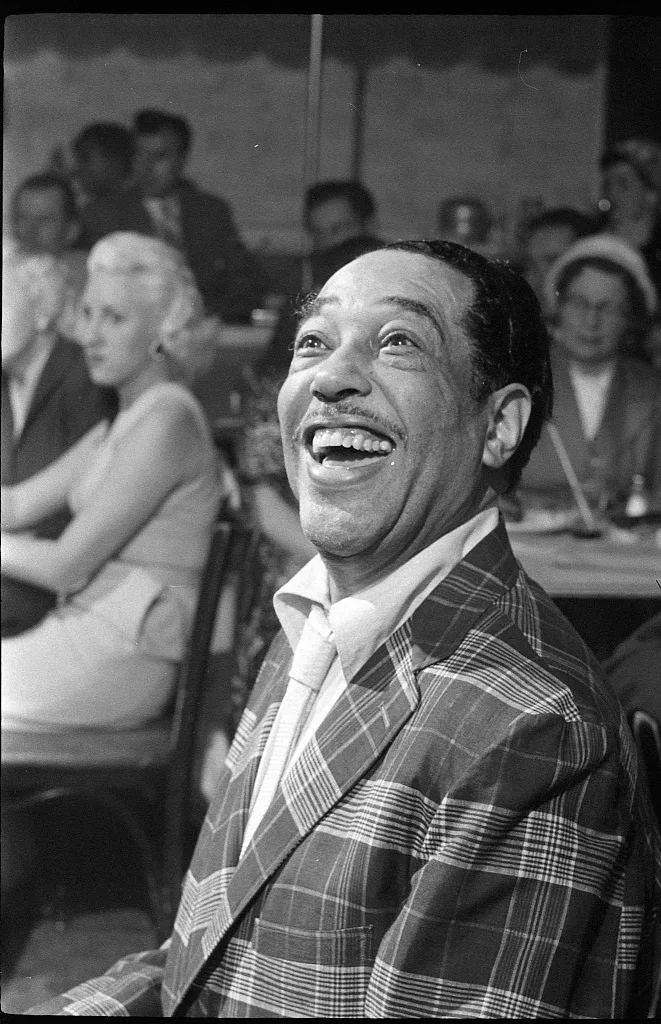
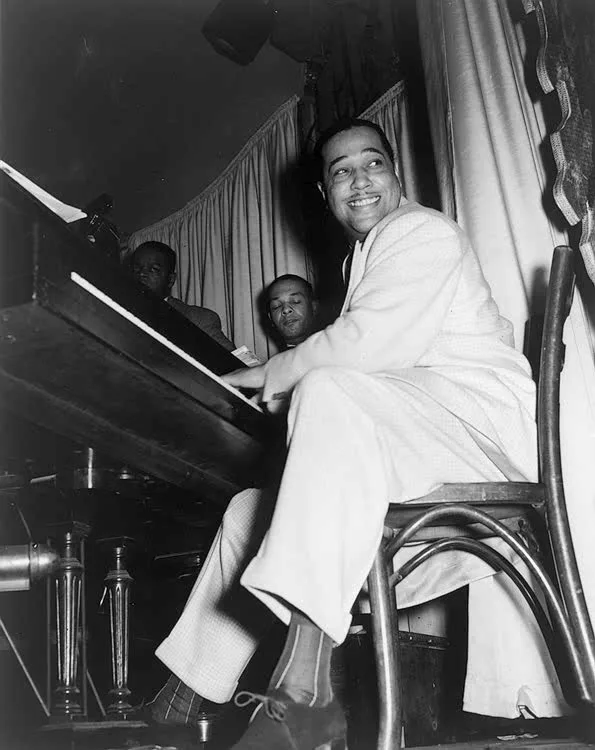
Edward Kennedy “Duke” Ellington, born in Washington, D.C., in 1899, led his own jazz orchestra from 1924 until his death fifty years later, building what critic Ralph J. Gleason called the body of work of “America’s most important composer.” After relocating to New York City in the mid-1920s, Ellington’s orchestra achieved national prominence through its residency at Harlem’s Cotton Club, and over his career he wrote or collaborated on more than one thousand compositions — the single largest recorded personal legacy of any composer in jazz history, with many of his pieces becoming enduring musical standards.
From a Poolroom to the Cotton Club
Ellington was born to two piano-playing parents in Washington, D.C. — his mother Daisy played parlor songs, his father James preferred operatic arias — and began formal piano lessons at age seven, though he was more drawn to baseball as a boy, recalling that President Theodore Roosevelt would sometimes stop his horse to watch the neighborhood children play. His childhood friend Edgar McEntee gave him the nickname “Duke” for his naturally elegant, dapper bearing, and it was not his formal lessons but sneaking into Frank Holiday’s Poolroom at age fourteen to hear working pianists play that truly ignited Ellington’s serious commitment to the instrument, setting him on the path toward the orchestra he would lead for the next five decades.
A Thirty-Five-Year Creative Partnership
Beginning at the close of the 1930s, Ellington entered a nearly thirty-five-year collaboration with composer-arranger-pianist Billy Strayhorn, whom Ellington called his writing and arranging companion; together they produced extended orchestral suites alongside shorter pieces, a partnership widely regarded as one of the most productive composing relationships in American musical history. In the early years of that partnership, with bassist Jimmy Blanton and tenor saxophonist Ben Webster in the band, Ellington’s orchestra reached what many critics consider its creative peak.
Legacy
After a quieter period, Ellington’s 1956 appearance at the Newport Jazz Festival sparked a major career revival and decades of regular world touring, and he continued performing in and scoring films and composing stage musicals into his final years. Widely regarded by critics including Gunther Schuller and Barry Kernfeld as jazz’s most significant composer, Ellington himself preferred to describe his own work as “beyond category” — a fitting summary for a body of work so vast and varied that it resists confinement to any single genre label, even one as broad as jazz itself.
Related
More in Literature, Music