Contemporary
National Museum of African American History and Culture
museum in Washington, D.C., a division of the Smithsonian Institution
Overview
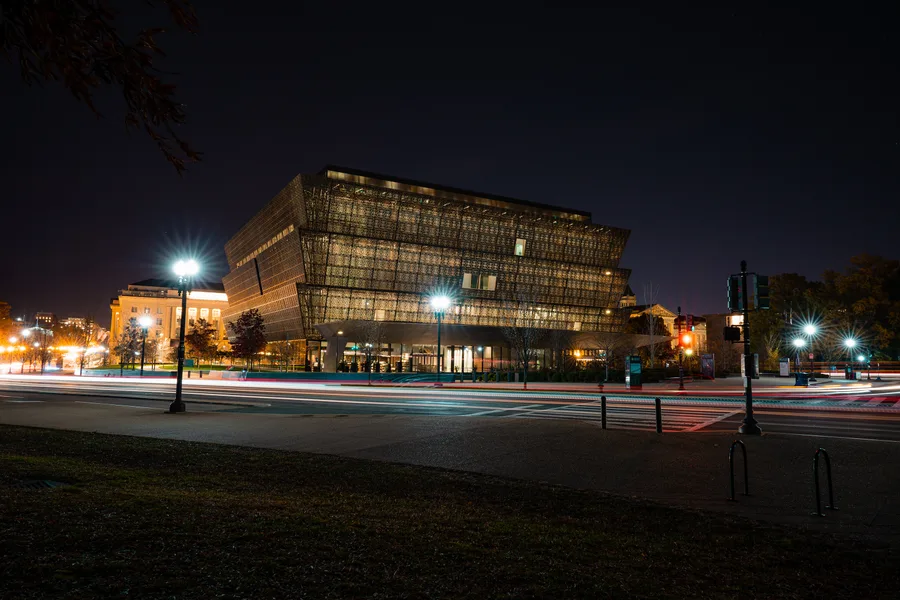
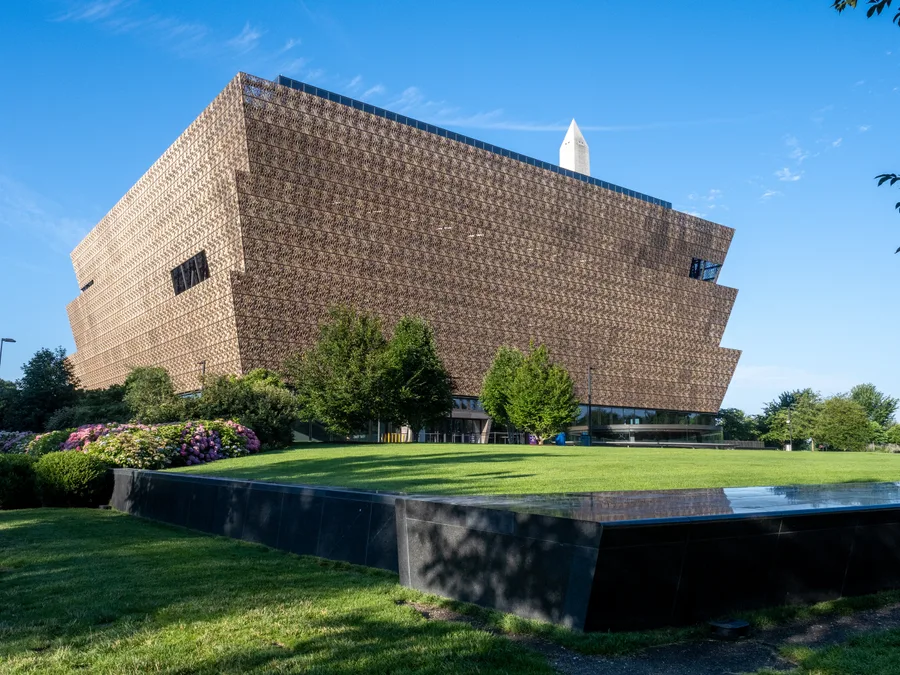
The National Museum of African American History and Culture (NMAAHC), a Smithsonian Institution museum on the National Mall in Washington, D.C., is the largest museum in the world dedicated to African American history and culture — an institution whose origins trace back more than a century, to 1915, when Black veterans of the Union Army, meeting at Washington’s Nineteenth Street Baptist Church for a reunion, formed a committee specifically to build a memorial to African American achievement, frustrated by the ongoing discrimination they still faced decades after their own wartime service.
A Century-Long Campaign
That 1915 effort achieved a partial victory in 1929, when President Herbert Hoover appointed a commission to advance the memorial concept, but neither congressional funding nor private fundraising materialized, and proposals for such a museum would resurface in Congress repeatedly over the next four decades without gaining real traction. Renewed momentum began in the early 1970s and accelerated in the 1980s, when Tom Mack, an African American businessman who chaired the tour company Tourmobile, used his nonprofit National Council of Education and Economic Development to press Congress directly; his outreach to Representative Mickey Leland won sponsorship of a 1985 resolution that passed the House in 1986, spurring the Smithsonian itself to mount a major 1987 exhibition on the Black diaspora — pressure that built steadily until a renewed campaign beginning in 1988 finally led to Congress formally authorizing the museum in 2003.
Opposition From Black Museum Leaders Themselves
The campaign’s path was not simply a matter of overcoming white resistance: John Kinard, president of the African American Museum Association and co-founder of the Anacostia Community Museum, actively opposed a national museum, arguing it would drain donor funding and out-compete smaller local Black history museums for artifacts and trained staff; he proposed a $50 million fund to support existing local institutions instead. Many of those local museums, having spent decades fighting for independence from white-dominated local governments, feared a national Smithsonian museum would ultimately absorb or subordinate them — a documented internal debate within Black museum leadership this site notes rather than presenting the campaign as universally supported from the start.
Legacy
The museum’s permanent home, designed by the Freelon Group, Adjaye Associates, and Davis Brody Bond, opened in 2016 in a ceremony led by President Barack Obama, and the finished 350,000-square-foot, ten-story building houses more than 40,000 objects, of which roughly 3,500 are on display at any given time. In 2022 alone, NMAAHC welcomed over 1.09 million visitors, making it the second-most-visited Smithsonian museum and the eighth-most-visited museum in the entire United States — concrete evidence of the public appetite for exactly the kind of documented, achievement-centered African American history this site itself exists to tell.
Related
- Mae Jemison
- The Legacy Museum and National Memorial for Peace and Justice
- National Civil Rights Museum at the Lorraine Motel
- Negro Leagues Baseball Museum
- Texas Southern University
- National Underground Railroad Freedom Center
More in Education