Contemporary
Negro Leagues Baseball Museum
museum in Kansas City, Missouri
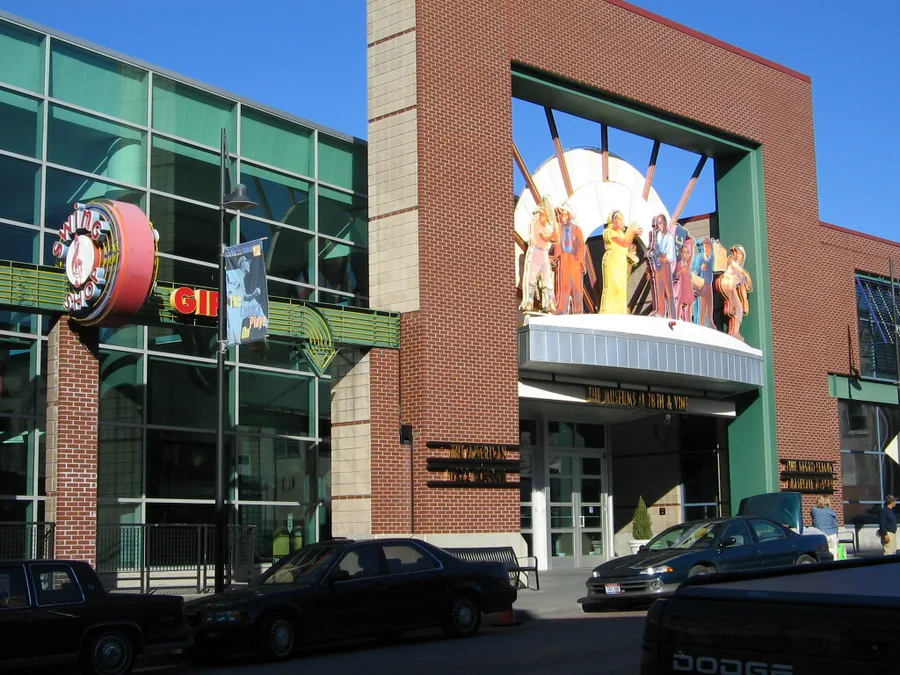
Overview
The Negro Leagues Baseball Museum (NLBM), founded in 1990 in Kansas City, Missouri’s historic 18th & Vine District, was built by the very people whose history it preserves: a group of former Negro league players, including Kansas City Monarchs outfielder Alfred Surratt and the legendary Buck O’Neil, alongside historians Larry Lester, Phil S. Dixon, and Horace Peterson. Its location in the 18th & Vine District was itself historically significant, since that neighborhood served as the hub of African American cultural life in Kansas City throughout the first half of the 20th century.
Growth and Recovery
The museum grew steadily from a single-room office in the historic Lincoln Building — expanding to a 2,000-square-foot space in 1994 and then, in 1997, to a purpose-built 10,000-square-foot facility five times its previous size — before nearly collapsing financially in 2008. Under the leadership of Bob Kendrick, who became president in 2011, the museum rebounded decisively, posting a $300,000 profit by 2012, its strongest financial year since 2007, and going on to win the Gold American Award for Nonprofit Organization of the Year in 2019, a full-circle recovery built on renewed community engagement.
The Field of Legends
The museum’s centerpiece is the Field of Legends, a recreated ballfield accessible only at the tour’s end, populated by nearly life-sized bronze statues of twelve Negro league greats: Josh Gibson, reputed to have hit over 80 home runs in a single season, crouches behind the plate; Satchel Paige, who became a major-league rookie at age 42 in 1948, stands on the mound; and Martín Dihigo, the only player inducted into the baseball halls of fame of three separate countries — Mexico, Cuba, and the United States — takes his place at bat, alongside Buck Leonard, John Henry Lloyd, Judy Johnson, Ray Dandridge, Cool Papa Bell, Oscar Charleston, Leon Day, and league founder Rube Foster.
Legacy
The museum’s cultural reach extends well beyond its own walls — an advance Kansas City screening of 42, the 2013 biographical film about Jackie Robinson’s time with the Kansas City Monarchs before he broke Major League Baseball’s color line, served as a benefit fundraiser for the NLBM, with actor Harrison Ford personally participating. Sharing its building with the American Jazz Museum, the NLBM stands as a permanent, physical monument built and sustained by the Negro leagues’ own players and historians — ensuring that the league’s history, covered in depth on this site’s own Negro Leagues Era page, is preserved on the players’ own terms rather than left to fade from public memory.