Contemporary
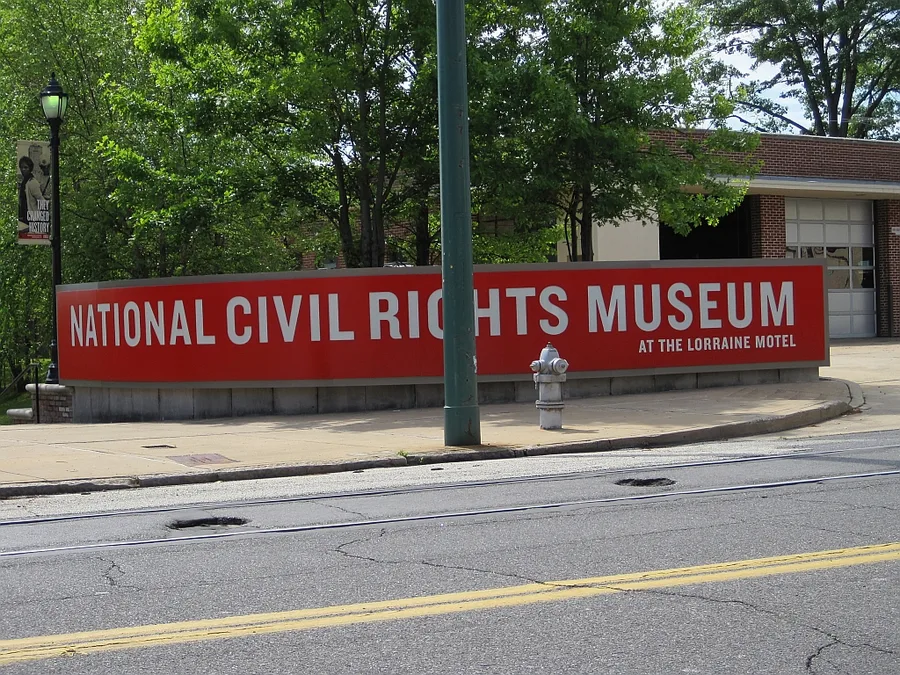
National Civil Rights Museum at the Lorraine Motel
hotel that was site of the assassination of Martin Luther King Jr., now a museum
Overview
The National Civil Rights Museum in Memphis, Tennessee, traces the history of the American civil rights movement from the 17th century to the present, built around one of the movement’s most solemn sites: the former Lorraine Motel, where Martin Luther King Jr. was assassinated on April 4, 1968. Rather than avoid the site of that tragedy, the museum’s founders made the deliberate choice to build the institution directly around it, transforming the location of King’s death into a comprehensive educational institution documenting the entire arc of the movement he helped lead.
From the “Sweet Lorraine” to the Site of Tragedy
The motel began in 1924 as the 16-room Windsor Hotel; Walter Bailey purchased it in 1945 and renamed it for his wife Loree and the song “Sweet Lorraine,” operating it as upscale lodging for Black travelers throughout the segregation era. After the 1964 Civil Rights Act outlawed whites-only businesses, Bailey expanded the property with a second floor, pool, and drive-up rooms to compete for a newly integrated clientele — and the motel became a favorite stop for musicians recording at nearby Stax Records, including Otis Redding, Aretha Franklin, and the Staple Singers. King was staying in Room 306, organizing support for Memphis’s sanitation workers’ strike, when he was assassinated there in April 1968.
A Comprehensive Civil Rights History
Following a major 2014 renovation, the museum expanded its use of multimedia and interactive exhibits, and in 2016 it became an affiliate museum of the Smithsonian Institution, a formal recognition of its national significance. The complex now includes the Lorraine Motel itself (owned by the state of Tennessee and operated by the museum under long-term lease) along with several adjacent historic buildings connected to the King assassination, including the boarding house from which the fatal shot was fired, together forming a contributing property within the South Main Street Historic District on the National Register of Historic Places.
Legacy
By tracing the civil rights struggle across three and a half centuries rather than treating it as a single mid-20th-century episode, the National Civil Rights Museum situates King’s assassination within the much longer arc of Black Americans’ organized pursuit of freedom and equality — the same longer arc this site’s own Eras & Movements section documents from pre-colonial Africa through the present. The museum remains one of the most visited civil rights historical sites in the United States, a place where the movement’s most painful moment has been deliberately transformed into a resource for public education and remembrance.
Related
- Mae Jemison
- The Legacy Museum and National Memorial for Peace and Justice
- Negro Leagues Baseball Museum
- National Museum of African American History and Culture
- Texas Southern University
- National Underground Railroad Freedom Center
More in Civil Rights, Education