World War II
Tuskegee Airmen National Historic Site
museum in Tuskegee, Alabama, USA
Overview
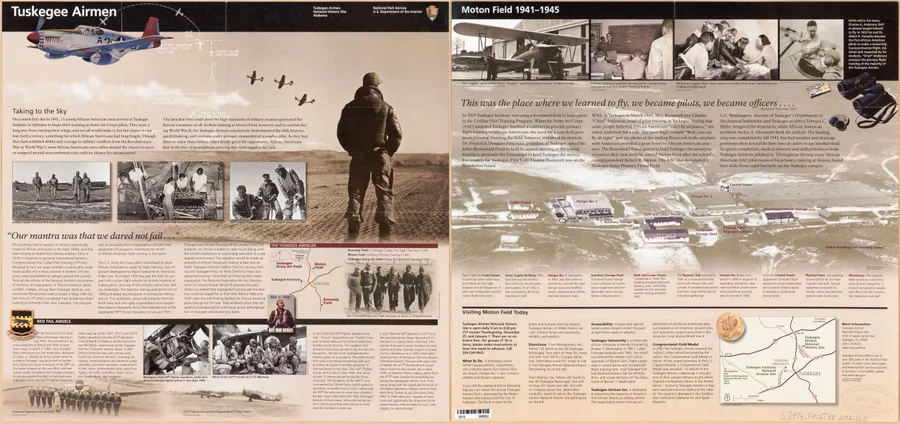
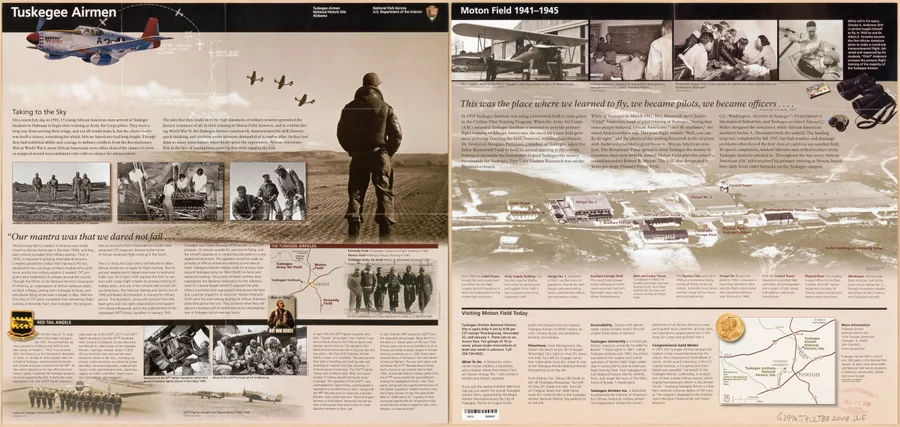
Tuskegee Airmen National Historic Site, at Moton Field in Tuskegee, Alabama, preserves the airfield where the Tuskegee Airmen — the first African American military pilots in U.S. history — received their primary flight training during World War II. Before 1940, Black Americans were barred outright from flying for the U.S. military; only sustained pressure from civil rights organizations and the Black press forced the creation of an all-Black pursuit squadron, based in Tuskegee, in 1941. Moton Field itself is named for Robert Russa Moton, the former Tuskegee Institute principal who had died the previous year.
The Tuskegee Experience
“Tuskegee Airmen” refers to everyone who took part in what was then called the “Tuskegee Experiment” — not only the roughly 1,000 pilots who ultimately qualified, but the full support structure of navigators, bombardiers, mechanics, instructors, and ground crew, approximately 16,000 people in total, who kept the program’s aircraft flying. The military selected Tuskegee Institute specifically because it already possessed the aeronautical facilities, qualified engineering and technical instructors, and year-round flying climate the program required — meaning Tuskegee’s pre-existing institutional excellence, not chance, is why this program landed there.
Built for the Program It Would Train
Moton Field itself was constructed between 1940 and 1942 with funding from the Julius Rosenwald Fund, a philanthropic foundation long dedicated to Black education, with architect Edward C. Miller and engineer G. L. Washington designing the facility and engineer-contractor Archie A. Alexander overseeing its construction — and Tuskegee Institute’s own laborers and skilled workers helped finish the field so flight training could begin on schedule. Tuskegee Institute went on to become one of the very few American institutions to independently own, develop, and control its own military flight-instruction facilities, providing the aircraft, hangars, maintenance shops, and living quarters while Army Air Corps officers oversaw the actual training curriculum.
Legacy
Despite facing segregation and open skepticism about their capabilities from within the military itself, the Tuskegee Airmen went on to become one of the most respected fighter groups of the entire war, proving decisively that Black pilots and ground crew could fly and maintain combat aircraft at the highest level. Moton Field today stands as the physical site where that proof was first built — literally constructed by the Tuskegee community itself — training pilot after pilot who would go on to fly combat missions that helped dismantle the very assumption of Black inferiority the military had used to justify excluding them from flying in the first place.
Related
- Josephine Baker
- Paul Robeson
- Robert Smalls
- Thurgood Marshall
- The American Revolution and Black Patriots
- Buffalo Soldiers
More in Military