Reconstruction
Hampton University
historically black university in Virginia
Overview
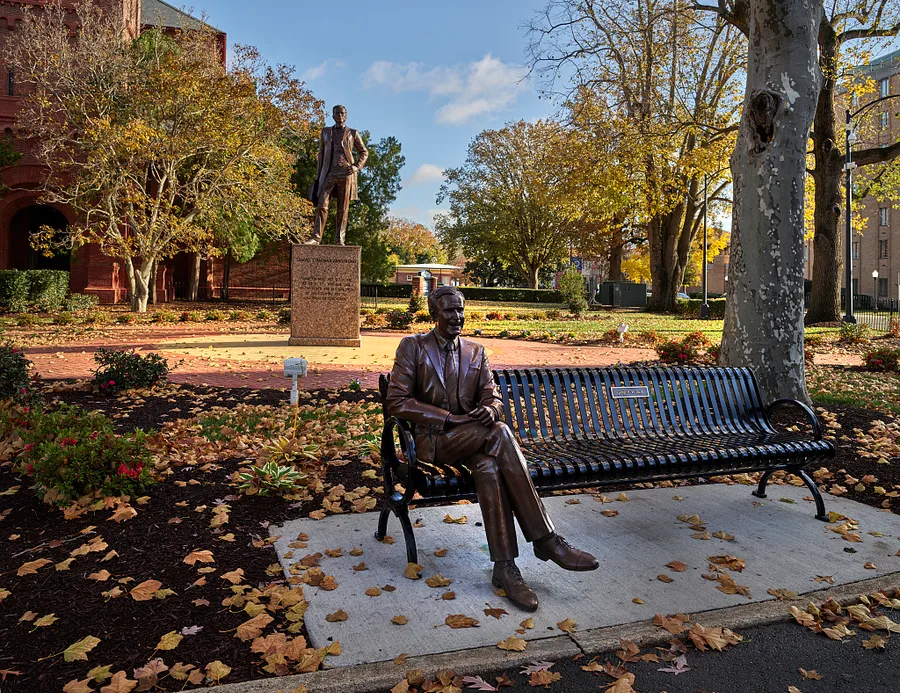
Hampton University is a private, historically Black research university in Hampton, Virginia, founded in 1868 as Hampton Agricultural and Industrial Institute by Black and white leaders of the American Missionary Association to educate freedmen after the Civil War. Its campus houses the Hampton University Museum, the oldest museum of the African diaspora in the United States and the oldest museum in Virginia. The university was first led by former Union General Samuel Chapman Armstrong.
From the Grand Contraband Camp
The campus sits on the grounds of “Little Scotland,” a former plantation near Fortress Monroe and the Grand Contraband Camp, where formerly enslaved people who reached Union lines during the Civil War’s first year sought refuge. In 1861 the American Missionary Association hired Mary Smith Peake as its first teacher there; she had already been secretly teaching enslaved and free Black people despite a state law against it, and began teaching for the Association on September 17, 1861, gathering her pupils under a large oak tree. In 1863, the Emancipation Proclamation was read at that same site — the first such reading in the Confederate states — and the tree has been known as the Emancipation Oak ever since, now part of a designated National Historic Landmark District.
Educating Booker T. Washington
Among the school’s famous alumni is Booker T. Washington, who went on to become the first principal of the Tuskegee Institute, which he led and developed for decades.
Related
- Blanche K. Bruce
- Frederick Douglass
- Hiram Rhodes Revels
- Alabama A&M University
- Alabama State University
- Alcorn State University
More in Education