Reconstruction
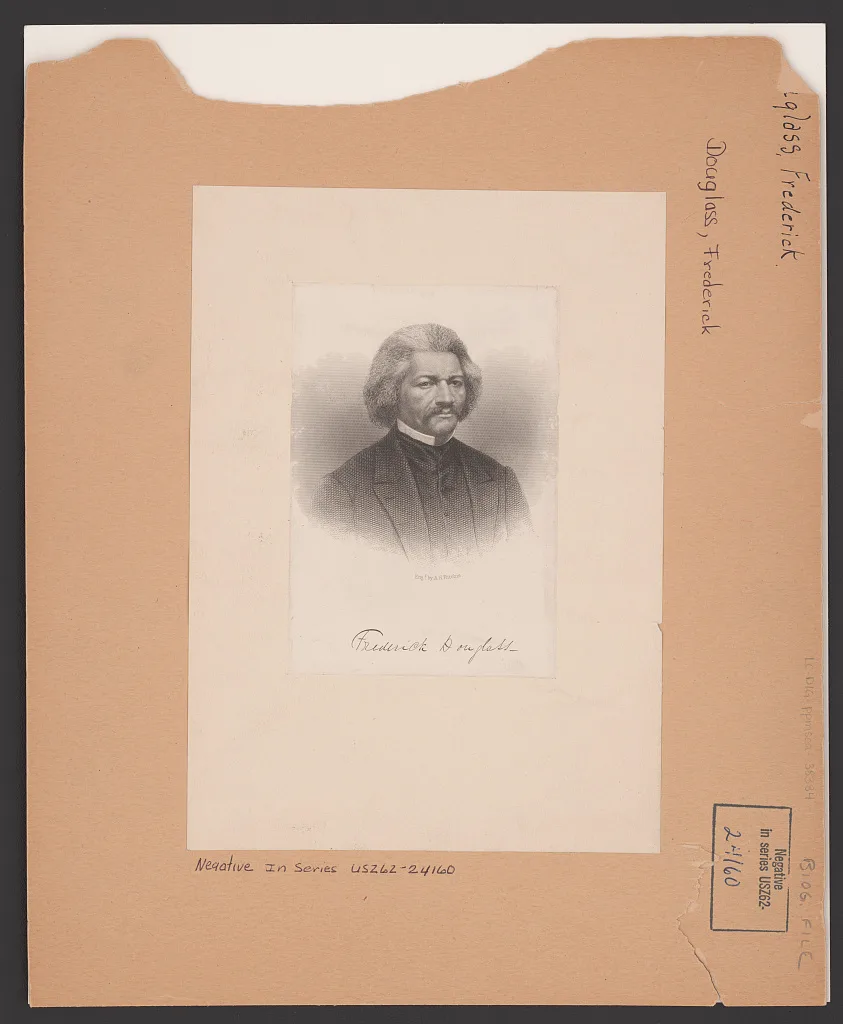
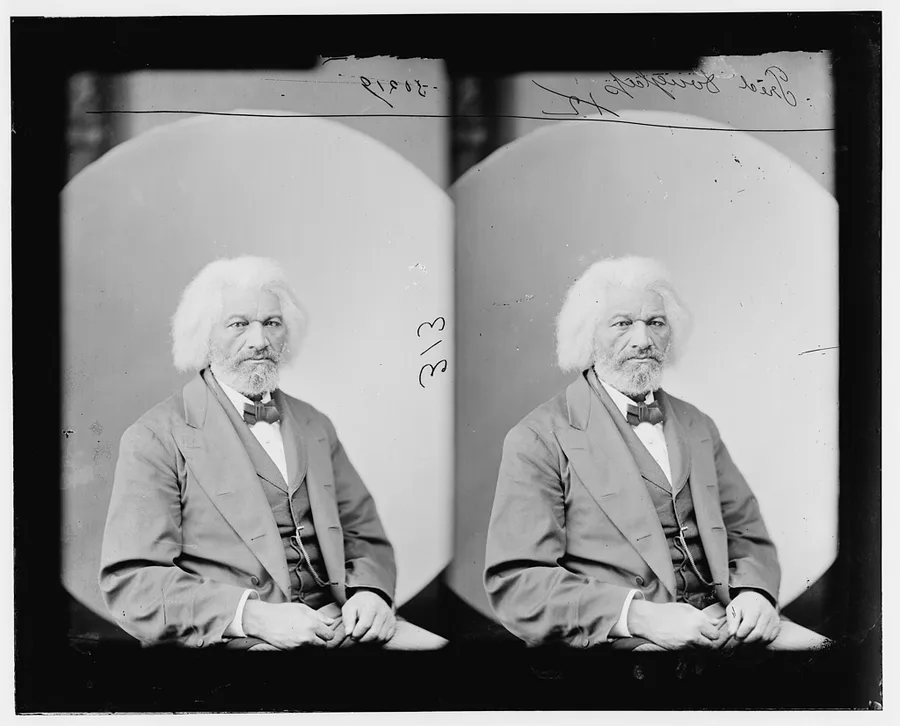
Frederick Douglass
African-American social reformer, writer, and abolitionist (c. 1818–1895)
Overview
Frederick Douglass, born Frederick Augustus Washington Bailey into slavery in Maryland around February 1818, escaped bondage in 1838 and became, in the words of historians, “the most important leader of the movement for African American civil rights in the 19th century.” Douglass’s genius as an orator and writer made him a living rebuttal to slavery’s central lie — that enslaved people lacked the intellectual capacity for independent citizenship — and his eloquence was so extraordinary that many Northern audiences found it difficult to believe he had ever been enslaved at all, disbelief that directly prompted him to write his first autobiography as proof.
A Birthdate He Chose for Himself
Born into slavery on Maryland’s Eastern Shore, Douglass never knew his exact birthdate — a deliberate cruelty of the system that enslaved him, since enslavers routinely withheld such records — and settled on celebrating February 14 as his birthday because his mother had called him her “Little Valentine”; historian Dickson Preston later used his enslaver’s own records to determine Douglass was most likely born in February 1818. Douglass wrote in his 1845 Narrative that his father was a white man, likely his mother’s own enslaver, and biographer David Blight noted that Douglass “searched in vain” for that man’s true identity for the rest of his life.
A Writer Who Changed the National Conversation
Douglass wrote three autobiographies over his lifetime — the 1845 Narrative of the Life of Frederick Douglass, an American Slave, which became a bestseller and reshaped public understanding of slavery’s brutality; My Bondage and My Freedom in 1855; and Life and Times of Frederick Douglass, first published in 1881 and revised in 1892, three years before his death. Beyond his own writing, Douglass built alliances across racial and ideological lines throughout his activism, championed the anti-slavery interpretation of the U.S. Constitution after breaking from William Lloyd Garrison’s more radical wing of the movement, and was an outspoken, consistent supporter of women’s suffrage decades before it became mainstream political ground. When radical abolitionists criticized his willingness to engage in dialogue even with slaveholders, Douglass replied simply: “I would unite with anybody to do right and with nobody to do wrong.”
Legacy
After the Civil War, Douglass continued campaigning for the rights of the formerly enslaved and held several public offices himself; in 1872, without his knowledge or consent, he became the first African American nominated for Vice President of the United States, as Victoria Woodhull’s running mate on the Equal Rights Party ticket. Douglass’s combination of documented firsthand testimony, world-class rhetorical skill, and sustained institutional activism across five decades makes him one of the central figures connecting the abolition movement, Reconstruction, and the broader arc of Black American civil rights history this site documents throughout its Eras & Movements section.
Related
- Blanche K. Bruce
- Hiram Rhodes Revels
- Alabama A&M University
- Alabama State University
- Alcorn State University
- Allen University
More in Literature, Civil Rights, Politics