Reconstruction
Hiram Rhodes Revels
American politician (1827-1901)
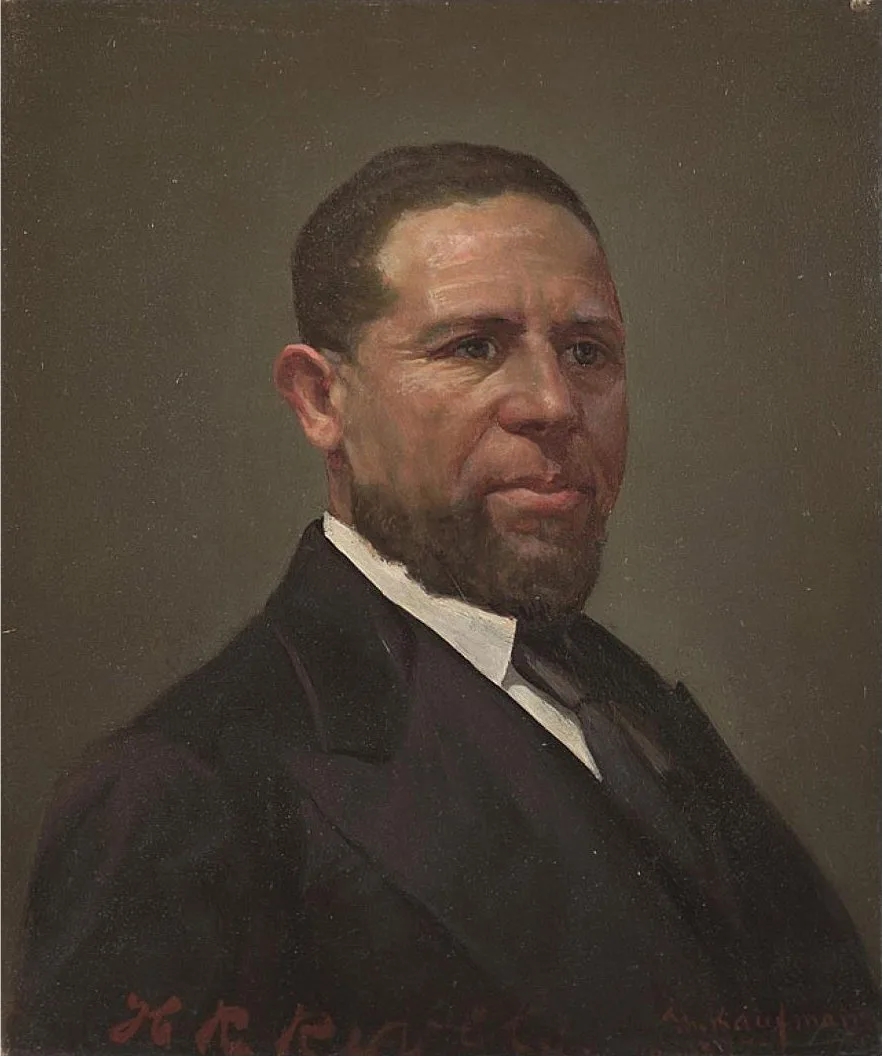
Overview
Hiram Rhodes Revels, born free in 1827 in Fayetteville, North Carolina, to free people of color whose ancestors had been free since before the American Revolution, became the first African American to serve in either house of the United States Congress when the Mississippi legislature elected him to the U.S. Senate in 1870 — a direct, historic breakthrough achieved during Reconstruction, just five years after the Civil War’s end. Revels received his early education from a local free Black woman despite the era’s restrictions on Black education, and as a young man was apprenticed as a barber, a respected trade that gave Black tradesmen valuable connections across racial lines.
Imprisoned for Preaching to the Enslaved
Ordained an African Methodist Episcopal minister in 1845, Revels preached and taught across Indiana, Illinois, Ohio, Tennessee, Missouri, and Kansas, work that carried real risk: “I was imprisoned in Missouri in 1854 for preaching the gospel to Negroes,” he later recalled, “though I was never subjected to violence.” He went on to study religion at Illinois’s Knox College from 1855 to 1857 and later served as a minister and school principal in Baltimore before the Civil War, when he helped organize two Black Union regiments and served as an Army chaplain, including at the Battle of Vicksburg.
From Union Chaplain to U.S. Senator
His election to the Senate in 1870 made him not merely a historical first but a symbol contested at the time: some senators challenged his eligibility to serve, arguing Black Americans had not been citizens long enough under the Dred Scott precedent, an objection the Senate ultimately rejected in seating him.
Legacy
After his Senate term, Revels was appointed the first president of Alcorn Agricultural and Mechanical College (now Alcorn State University), a historically Black institution, serving from 1871 to 1873 before returning later in life to ministry in the African Methodist Episcopal Church. Revels’s path — from a free-born Southern barber’s apprentice imprisoned for preaching to enslaved people, through wartime chaplaincy, to the first Black seat in Congress and the leadership of a historically Black college — traces, in one documented life, several of the defining institutional breakthroughs of the Reconstruction era this site profiles across its Places and Eras sections. His marriage in the 1850s to Phoebe Bass, a free Black woman, and his decades spent moving between ministry, education, and eventually politics reflect a career built cumulatively across many institutions rather than a single dramatic turning point.
Related
- Blanche K. Bruce
- Frederick Douglass
- Alabama A&M University
- Alabama State University
- Alcorn State University
- Allen University
More in Politics