Reconstruction
Blanche K. Bruce
American politician (1841-1898)
Overview
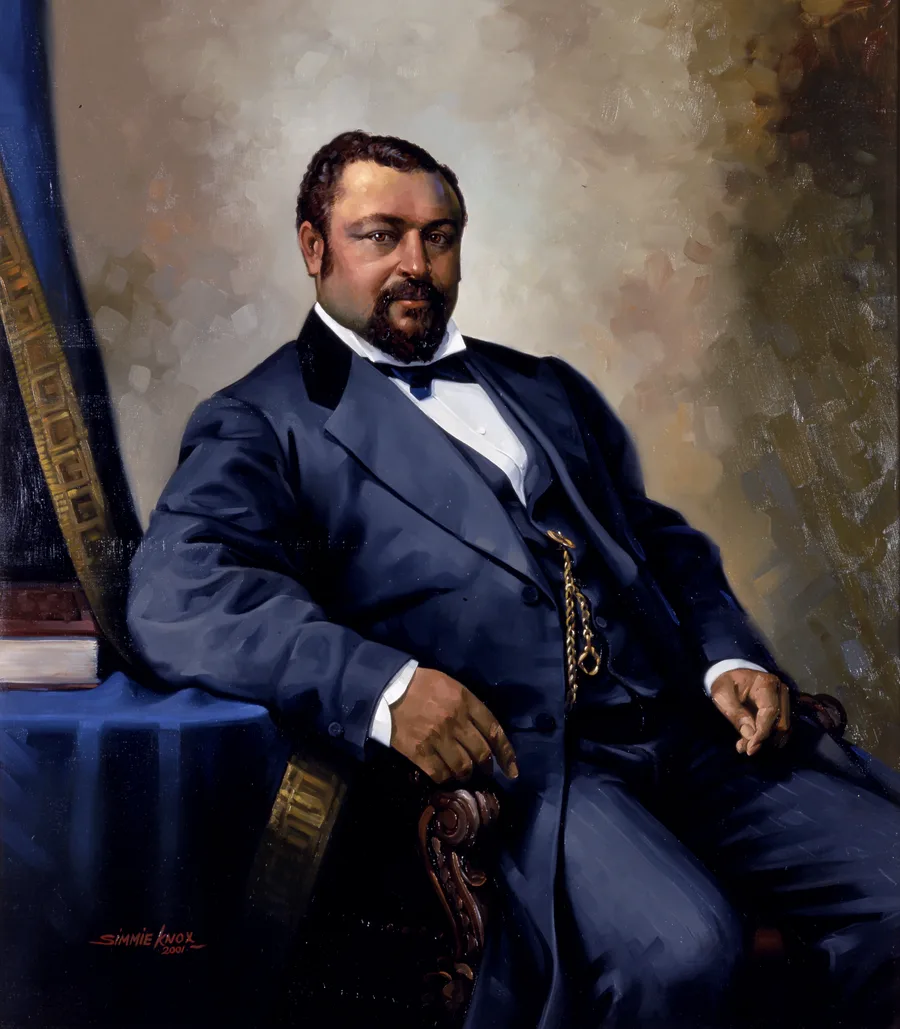
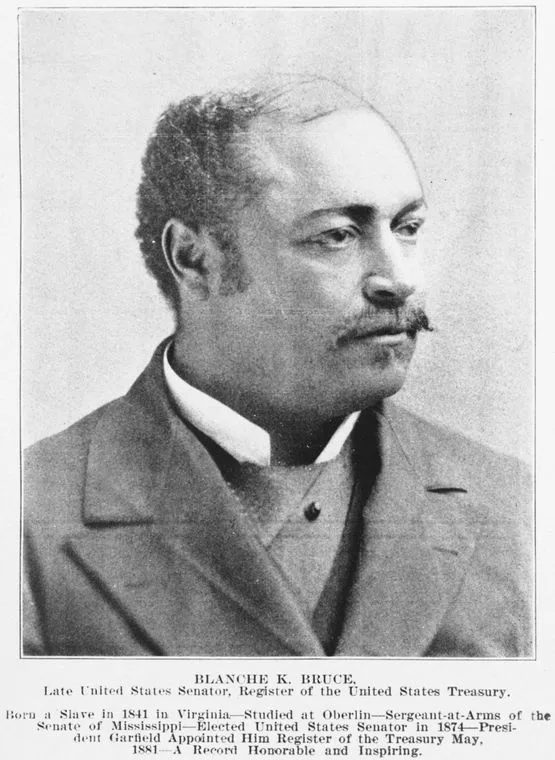
Blanche Kelso Bruce, born into slavery in 1841 in Prince Edward County, Virginia, went on to become the first African American elected to the United States Senate to serve a full term — Hiram Revels, also of Mississippi, preceded him as the first Black senator but did not complete a full term. Bruce’s father was Pettis Perkinson, the white planter who enslaved Bruce’s mother, Polly Bruce; Perkinson educated Bruce alongside a legitimate half-brother, an unusual arrangement that gave Bruce a foundation his later self-made success would build on substantially.
From Freedom to the U.S. Senate
Bruce gained his freedom at the outbreak of the Civil War and went on to attend Oberlin College, work as a Mississippi River steamboat porter, and establish a school for Black children in Hannibal, Missouri, before relocating to Mississippi’s Delta region during Reconstruction, where he purchased a plantation and became a wealthy landowner in his own right. That wealth and local standing translated directly into political power: Bruce served in a succession of Mississippi county offices before his election to the U.S. Senate, where he represented Mississippi from 1875 to 1881, becoming a national figure in Republican Reconstruction-era politics.
Presiding Over the Senate and a Place on U.S. Currency
On February 14, 1879, Bruce presided over the United States Senate, becoming the first African American — and the only former enslaved person — ever to do so, a milestone that placed a man born in bondage in the chair of the body that had once debated his own legal status as property. In 1881, President James Garfield appointed Bruce Register of the Treasury, a position in which Bruce’s signature appeared on U.S. paper currency, making him the first African American whose signature was printed on the nation’s money. At the 1880 Republican National Convention, Bruce further became the first African American to receive votes for national office at a major party’s nominating convention, winning eight votes for vice president.
Legacy
After his Senate term, Bruce remained politically active in Washington, D.C., securing a series of Republican patronage appointments and campaigning for party candidates nationwide; he served as Recorder of Deeds for the District of Columbia from 1890 to 1893 under President Benjamin Harrison, and President William McKinley reappointed him Register of the Treasury in 1897, a post he held until his death from diabetes complications in 1898. His home, the Blanche K. Bruce House in Washington, D.C., is preserved today as a National Historic Landmark — a direct, physical marker of the distance Bruce traveled from an enslaved childhood in rural Virginia to the Senate presiding chair, the nation’s currency, and a landmarked residence in the nation’s capital.