Reconstruction to early 20th century
George Washington Carver
African American botanist and inventor (1864-1943)
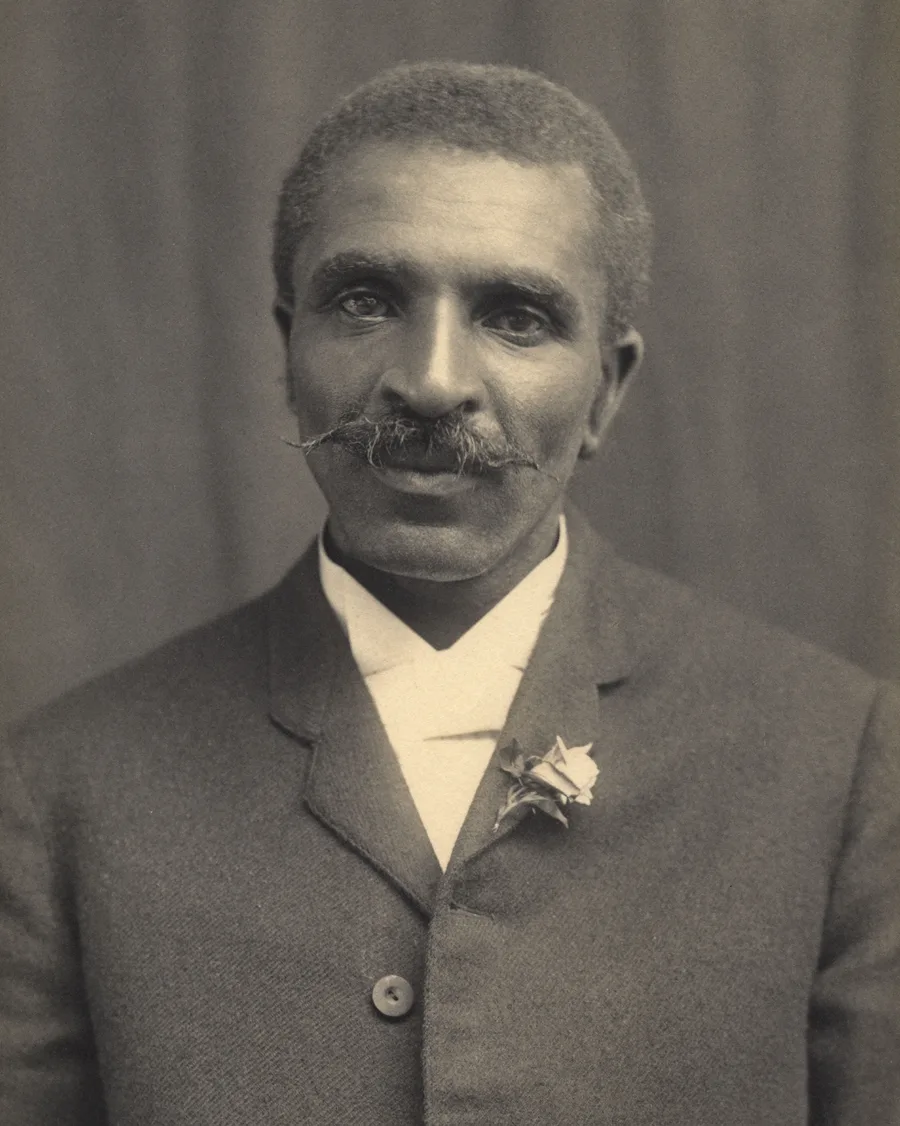
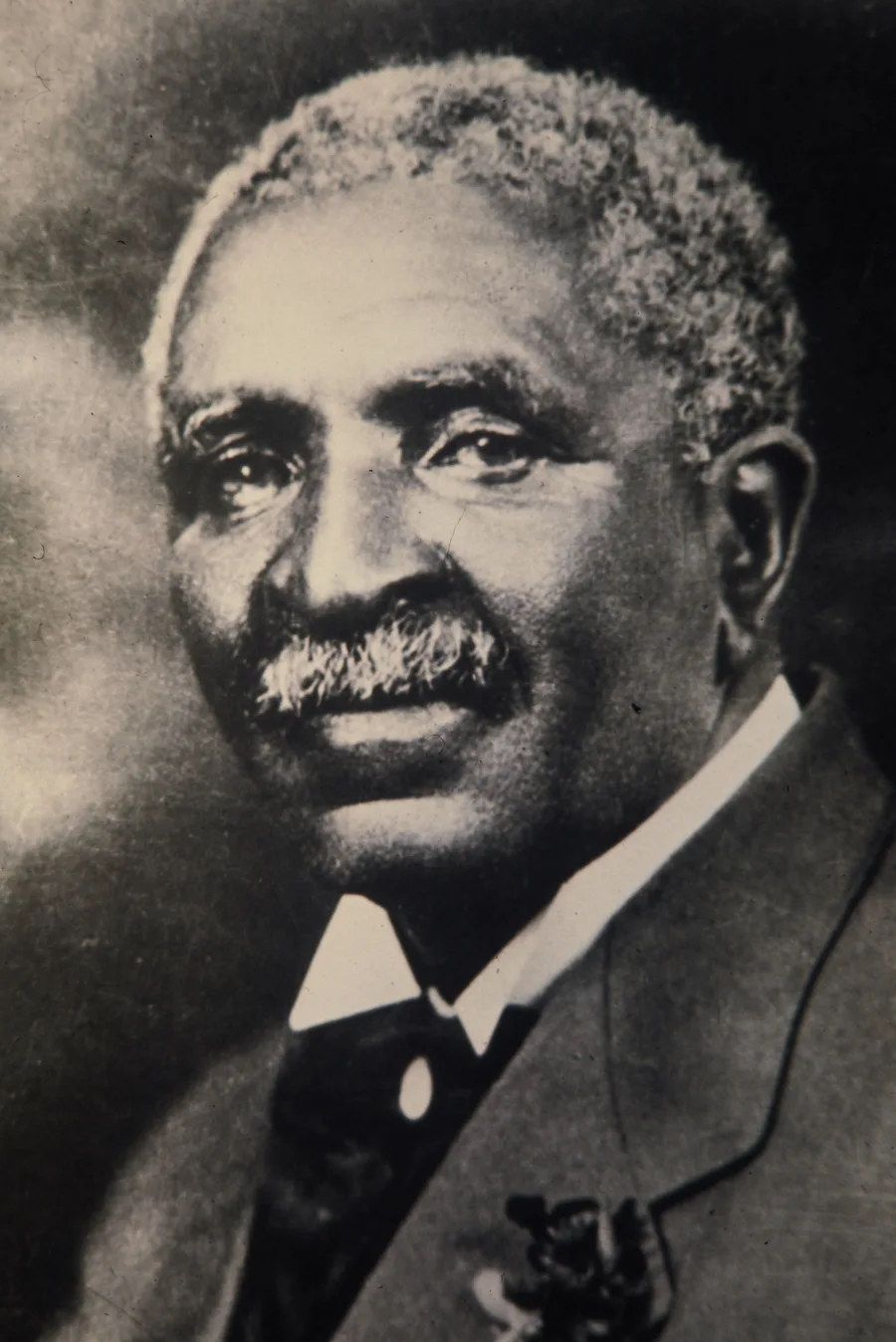
Overview
George Washington Carver, born into slavery around 1864 near Diamond Grove, Missouri — his exact birthdate unknown, as was common for children born before slavery’s abolition — became one of the most celebrated Black scientists in American history, a pioneering agricultural researcher whose work reshaped Southern farming practice. As a professor at Tuskegee Institute, Carver developed practical techniques to restore soils depleted by decades of repeated cotton planting, promoting alternative crops including peanuts and sweet potatoes as both a soil-management strategy and a direct path to greater self-sufficiency for the South’s poorest farmers.
Kidnapped as an Infant
When Carver was just a week old, night raiders kidnapped him, his sister, and his mother and sold them in Kentucky; his enslaver, Moses Carver, hired a man to recover them but succeeded in finding only the infant George, whom Moses and his wife Susan raised as their own once slavery was abolished, teaching him to read. Barred from Diamond Grove’s segregated public school, young Carver walked to a school for Black children ten miles away in Neosho, where a woman named Mariah Watkins took him in and renamed him “George Carver” — telling him, in words he carried for life, “You must learn all you can, then go back out into the world and give your learning back to the people.”
Science in Service of Poor Farmers
Under Carver’s leadership, Tuskegee’s Experiment Station published more than forty practical bulletins for farmers — many written personally by Carver — covering everything from combating soil depletion on a limited budget to producing larger crop yields and preserving food, technical knowledge deliberately written and distributed to reach farmers with little formal education or capital. Carver’s work was applied science aimed squarely at material conditions: he chose peanuts and sweet potatoes specifically because they matched the depleted soil conditions Southern farmers actually faced, not for their novelty as research subjects.
Legacy
Carver’s achievements earned him the NAACP’s Spingarn Medal and a level of fame that crossed racial lines in an era of severe segregation — Time magazine dubbed him a “Black Leonardo” in 1941, reflecting genuine, widespread recognition in the white press and public at a moment when such crossover acclaim for a Black scientist was exceedingly rare. Carver was also an early and committed advocate for environmentalism and sustainable agriculture decades before those became mainstream scientific priorities, cementing his legacy as both a working scientist who improved real farmers’ material lives and a broader symbol of Black scientific achievement under Jim Crow.