c. 1400 CE – 1905 CE
Oyo Empire
former imperial state
Date range and summary are drafted from Wikidata pending a scholarly-source verification pass — treat as approximate, not settled fact, until re-sourced from academic historians/archaeologists.
Overview
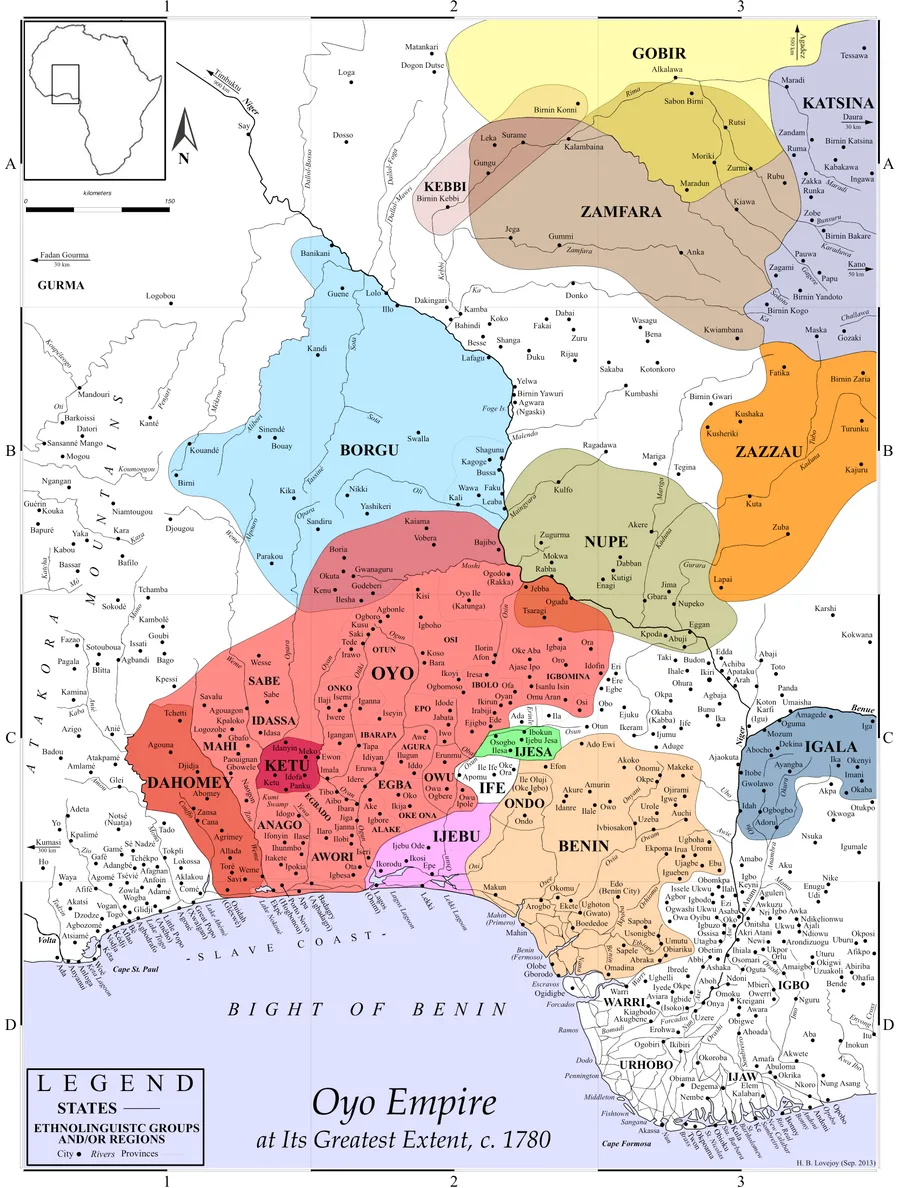
The Oyo Empire was the largest and most powerful Yoruba-speaking state in West African history, built in present-day southwestern Nigeria and extending influence into modern Benin. Founded, according to Yoruba tradition, by Oranmiyan, a prince of the Yoruba kingdom of Ile-Ife, Oyo grew from a single city into the political center of Yorubaland through a combination of skilled governance, control of regional trade, and — decisively — the military use of cavalry, a technology few of its forest-zone neighbors could match or counter.
Defeat, Exile, and Rebuilding
Oyo’s early growth was not uninterrupted: around 1535, the kingdom suffered a major defeat at the hands of the Nupe under their leader Tsoede, who sacked Oyo’s capital and forced its ruling dynasty into an 80-year exile in the kingdom of Borgu. Rather than ending Oyo’s story, this exile became the foundation for something larger — when the Yoruba rebuilt Oyo in the 17th century, they did so with a deliberately stronger, more centralized government and, taking a lesson directly from the Nupe enemies who had defeated them, an army rearmed with cavalry and armor of its own.
An Imperial Power in Yorubaland
That rebuilt Oyo became the dominant power in Yorubaland from the late 16th through the early 18th century, its cavalry giving it military reach that smaller neighboring kingdoms could not resist. Rulers and citizens of other kingdoms — including Great Ardra and, on one notable occasion, princes fleeing the conquest of Wémè by the Kingdom of Dahomey — sought Oyo’s help to settle disputes or right grievances, and Oyo’s forces answered these calls decisively enough that neighboring states grew wary of provoking the empire. Oyo’s authority extended over Dahomey itself for a period, and its tributary reach eventually included coastal kingdoms engaged in Atlantic trade, though Oyo itself never absorbed the entire Yoruba-speaking world.
Zenith and Decline
By 1680 the empire spanned more than 150,000 square kilometers, and Oyo reached the height of its power in the 18th century, held together less by force alone than by a workable balance of local autonomy under imperial authority — a durable system of governance rather than pure conquest. That balance began to fracture in 1754, when the powerful prime minister Gaha forced four successive Alaafins into ritual suicide in a single year while consolidating power for himself; one king reigned only 17 days before being deposed. Gaha’s twenty-year reign of political terror ended with his execution in 1774, but the instability he unleashed proved lasting: further palace intrigue, failed military campaigns against Borgu and Nupe, and the 1817 secession of the frontier war-camp of Ilorin under the general Afonja fractured imperial unity for good, opening the door to the Fulani jihad and civil wars that ended Old Oyo’s power in the early 19th century.
Legacy
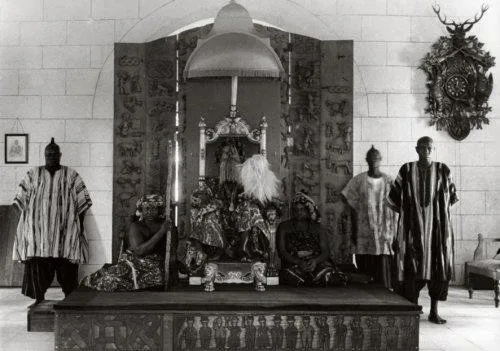
Oyo’s centuries as the political and military center of Yorubaland left a lasting institutional and cultural legacy across present-day Nigeria and Benin — the title “Alaafin of Oyo,” first taken by Oranmiyan, remains a position of significant traditional authority today, and Yoruba governance structures, religious traditions (including the worship of Sango, a deified early Alaafin, as the orisha of thunder and lightning), and cultural practices that took shape under Oyo’s rule remain a living part of Yoruba identity across West Africa and its diaspora.