c. 1430 CE – 1760 CE
Kingdom of Mutapa
kingdom in southern Africa between 1430 and 1760
Date range and summary are drafted from Wikidata pending a scholarly-source verification pass — treat as approximate, not settled fact, until re-sourced from academic historians/archaeologists.
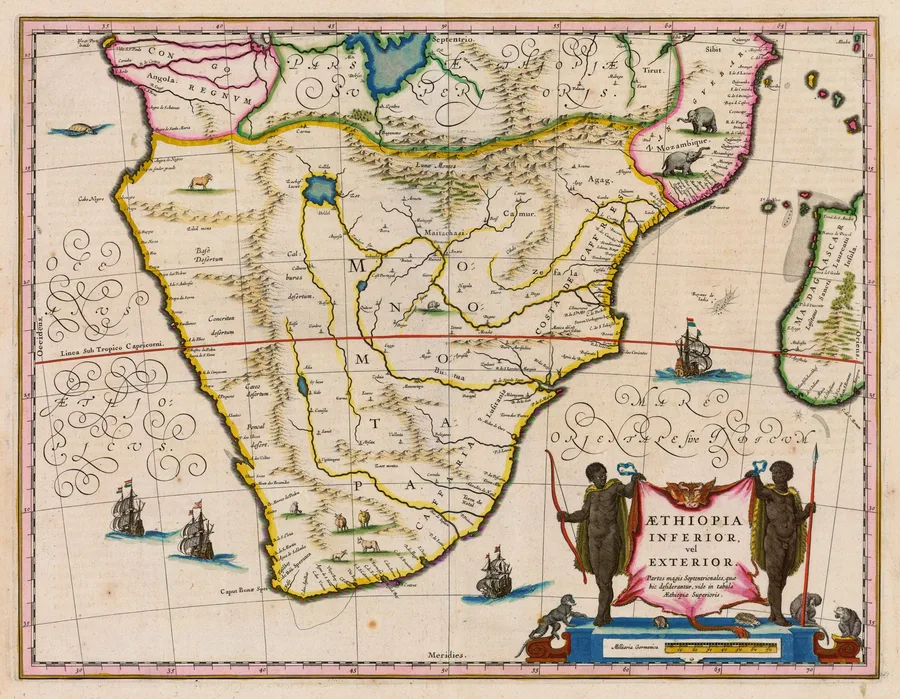
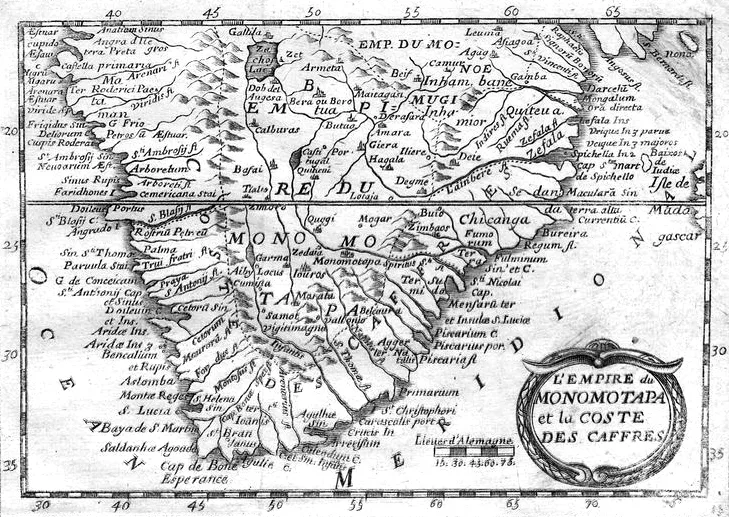
Overview
The Mutapa Empire, also known as Mwenemutapa or by the Portuguese transliteration Monomotapa, was a Shona state on the northern Zimbabwean Plateau, its name derived from the royal title Mwenemutapa — combining Mwene, “lord,” and Mutapa, “conquered land” — a title that, like Ghana’s before it, was eventually applied to the whole kingdom rather than just its ruler. Mutapa emerged as the successor to Great Zimbabwe, carrying forward that earlier civilization’s traditions of stone construction, sacred kingship, and long-distance trade onto a new stage further north.
Founding and Trade Networks
Shona oral tradition credits the kingdom’s founding to Mutota, remembered as an elephant hunter-warrior of the Nzou Samanyanga clan who took interest in trade along the Zambezi River and in the salt deposits of the Dande region in the early 15th century. Mutota built alliances and intermarried with local Tonga and Tavara communities, using both diplomacy and succession politics to extend his influence, and established his capital at Chitako-Changonya Hill, where he built a stone enclosure — a zimbabwe — continuing the same monumental building tradition that had defined Great Zimbabwe. Mutapa’s rulers went on to control access to goldfields and Zambezi River trade routes connecting the interior of southern Africa to Indian Ocean commerce via Swahili and later Portuguese traders on the coast.
A Contested Founding Chronology
Historians Stan Mudenge, David Beach, and Innocent Pikirayi treat Shona oral traditions about Mutota as broadly faithful to the real process of state formation, dating it to the 14th and 15th centuries, but they also note the traditions appear “telescoped” — mentioning only about half of the kingdom’s known rulers, likely because rival royal houses were sometimes deliberately omitted to weaken competing claims to succession. Beach went further, suggesting Mutota may have functioned as a largely symbolic founding figure in later retellings, since 18th-century traditions recorded no mention of him at all and instead named different rulers, Nemangoro and Nemapangere, as Mutapa’s first kings — a genuine scholarly disagreement this site notes openly rather than resolving with false certainty. Later tradition holds that Mutota was succeeded by his son Matope, who built his own zimbabwe at Bedza and led extensive military campaigns conquering Tavara and Tonga territory east of the Musengezi River.