c. 1235 CE – 1670 CE
Mali Empire
empire in West Africa from c.1230 to 1670
Date range and summary are drafted from Wikidata pending a scholarly-source verification pass — treat as approximate, not settled fact, until re-sourced from academic historians/archaeologists.
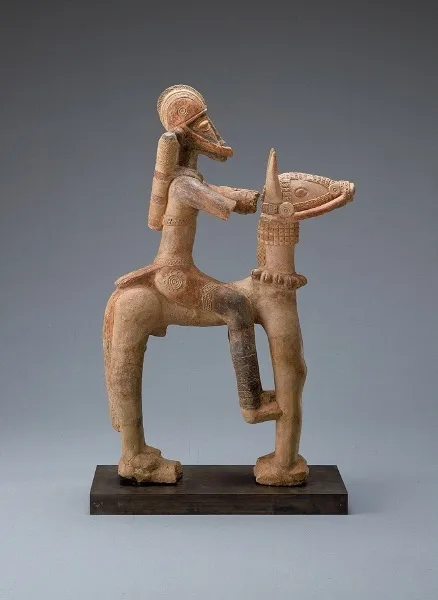
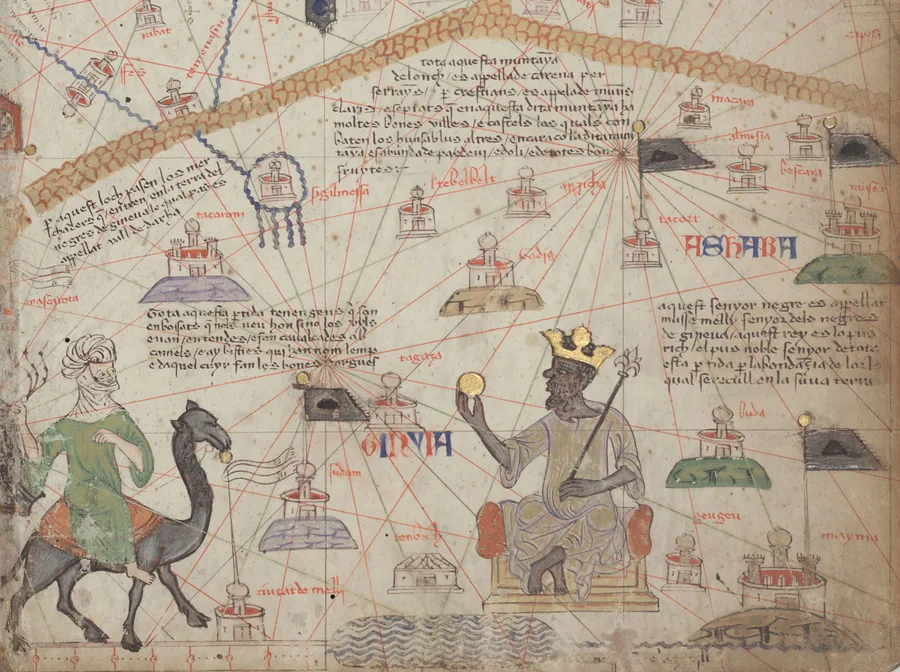
Overview
The Mali Empire was, at its height, the largest empire in West Africa and one of the wealthiest states anywhere in the medieval world, ruling from roughly 1235 to 1610 over a territory whose language, laws, and customs shaped the entire region. It began as a small Mandinka kingdom on the upper Niger River and rose to dominance under Sundiata Keita, a warrior-prince of the Keita dynasty who, around 1235, led a coalition that overthrew the regional ruler Soumaoro Kanté of the Sosso Empire. Sundiata’s victory is remembered as the founding moment of Mali, and the constitution he is credited with establishing, the Kouroukan Fouga, is regarded by some historians as one of the world’s earliest written charters of governance.
Mansa Musa and the Wealth of Mali
Mali’s kings took the title mansa after Sundiata’s death, and no mansa did more to put the empire on the world stage than Mansa Musa, a devout and well-educated Muslim who took the throne around 1312. Musa’s pilgrimage to Mecca from 1324 to 1326 became legendary: traveling with a personal guard of roughly 500 men, he gave away and spent so much gold passing through Cairo that, according to the contemporary historian al-Maqrizi, the value of gold in Egypt and Arabia was measurably depressed for the following twelve years — a striking, independently documented record of just how much wealth Mali commanded. Musa was as invested in learning as in gold: after peacefully annexing Timbuktu in 1324, he transformed its informal Sankore madrasah into a full Islamic university, and commissioned mosques and palaces in both Timbuktu and Gao that cemented the empire’s reputation as a center of scholarship as well as wealth.
Governance, Travelers, and Legacy
Mali’s administrative reach and prosperity attracted outside observers who left invaluable written records: the Moroccan traveler Ibn Battuta visited during the 19-year reign of Mansa Suleyman and documented the empire’s order and legal sophistication firsthand. Suleyman’s death marked the end of Mali’s golden age and the start of a slower decline, but the empire remained a substantial regional power for generations more — the 16th-century chronicle Tarikh al-Sudan, along with independent accounts from the Venetian explorer Alvise Cadamosto and Portuguese traders, confirm that peoples along the Gambia River were still subjects of the mansa of Mali well into the 15th century. Mali’s influence on the languages, Islamic scholarship, and trade networks of West Africa outlasted the empire’s political power by centuries.