1941
The Tuskegee Airmen
African-American military pilots during World War II
This page discusses racial segregation and discrimination the Tuskegee Airmen faced within the U.S. military during World War II.
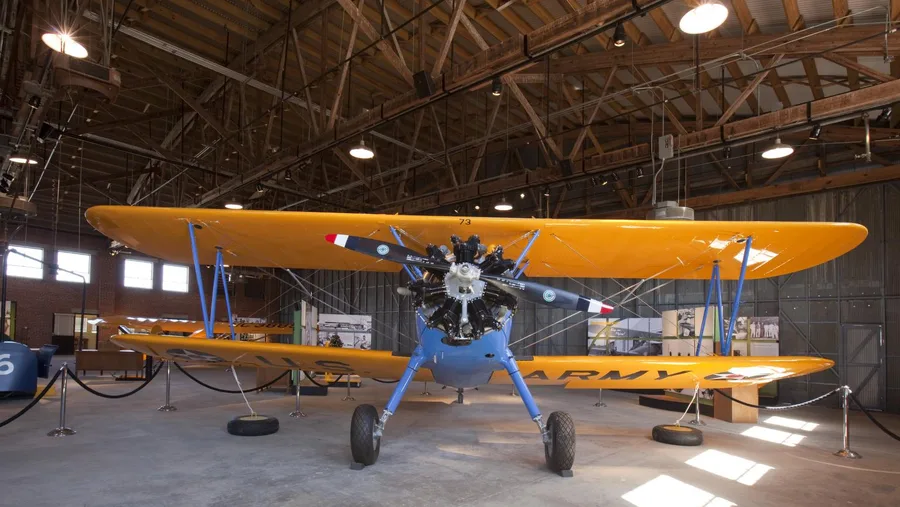
Overview
The Tuskegee Airmen were a group of primarily African-American military pilots — fighter and bomber — and airmen who fought in World War II, forming the 332nd Fighter Group and the 477th Bombardment Group of the United States Army Air Forces. The name also covers the navigators, bombardiers, mechanics, instructors, crew chiefs, nurses, cooks, and other support personnel who kept the units flying. All were trained at Griel Field, Kennedy Field, Moton Field, Shorter Field, and Tuskegee Army Air Field, and educated at the Tuskegee Institute (now Tuskegee University) near Tuskegee, Alabama. Of the 922 pilots trained, five were Haitians from the Haitian Air Force, one was from Trinidad, and the group also included airmen born in the Dominican Republic and Jamaica. The Tuskegee Airmen earned three Distinguished Unit Citations for their combat record.
The Fight to Serve
Before the Tuskegee Airmen, no African American had ever been a U.S. military pilot. African-American men who tried to become aerial observers in 1917 were rejected, and Eugene Bullard served in the French air service during World War I because he was not allowed to serve in an American unit. More than two decades of advocacy followed, led by civil rights figures including Walter White of the NAACP, labor leader A. Philip Randolph, and Judge William H. Hastie. On April 3, 1939, Congress passed Appropriations Bill Public Law 18 with an amendment by Senator Harry H. Schwartz funding the training of African-American pilots, and in 1941 the War Department — under pressure, three months before its transformation into the USAAF — activated the first all-Black flying unit, the 99th Pursuit Squadron.
Training Under Jim Crow
The Tuskegee program received a publicity boost on March 29, 1941, when First Lady Eleanor Roosevelt inspected it and flew for half an hour with African-American chief civilian instructor C. Alfred “Chief” Anderson, afterward announcing, “Well, you can fly all right.” She later used her position as a trustee of the Julius Rosenwald Fund to arrange a $175,000 loan to help finance Moton Field. Selection standards for the program were set deliberately high, screening for intelligence and physical fitness; airman Coleman Young, later the first African-American mayor of Detroit, told journalist Studs Terkel: “They made the standards so high, we actually became an elite group. We were screened and super-screened. We were unquestionably the brightest and most physically fit young blacks in the country. We were super-better because of the irrational laws of Jim Crow.” At Tuskegee Army Air Field, Colonel Frederick Kimble maintained segregation on the base in defiance of new Army regulations, a policy resented by the airmen, until his replacement, Major Noel F. Parrish, petitioned Washington to let the Tuskegee Airmen serve in combat.
Combat Record and the “Red Tails”
The 99th Pursuit Squadron became the first Black flying squadron and the first to deploy overseas, reaching North Africa in April 1943 and later Sicily and Italy. The 332nd Fighter Group deployed to Italy in early 1944 and, beginning in June 1944, flew heavy bomber escort missions — the role for which the unit is best remembered. Over the course of the war the airmen flew the Curtiss P-40 Warhawk, the Bell P-39 Airacobra, the Republic P-47 Thunderbolt, and finally the North American P-51 Mustang, painting their aircrafts’ tails red, which earned them the nickname “Red Tails.”
Related entries
More in Military, Civil Rights