Swahili Coast Trade Era
coast of Kenya, Tanzania, and northern Mozambique, located in southeastern Africa
Overview
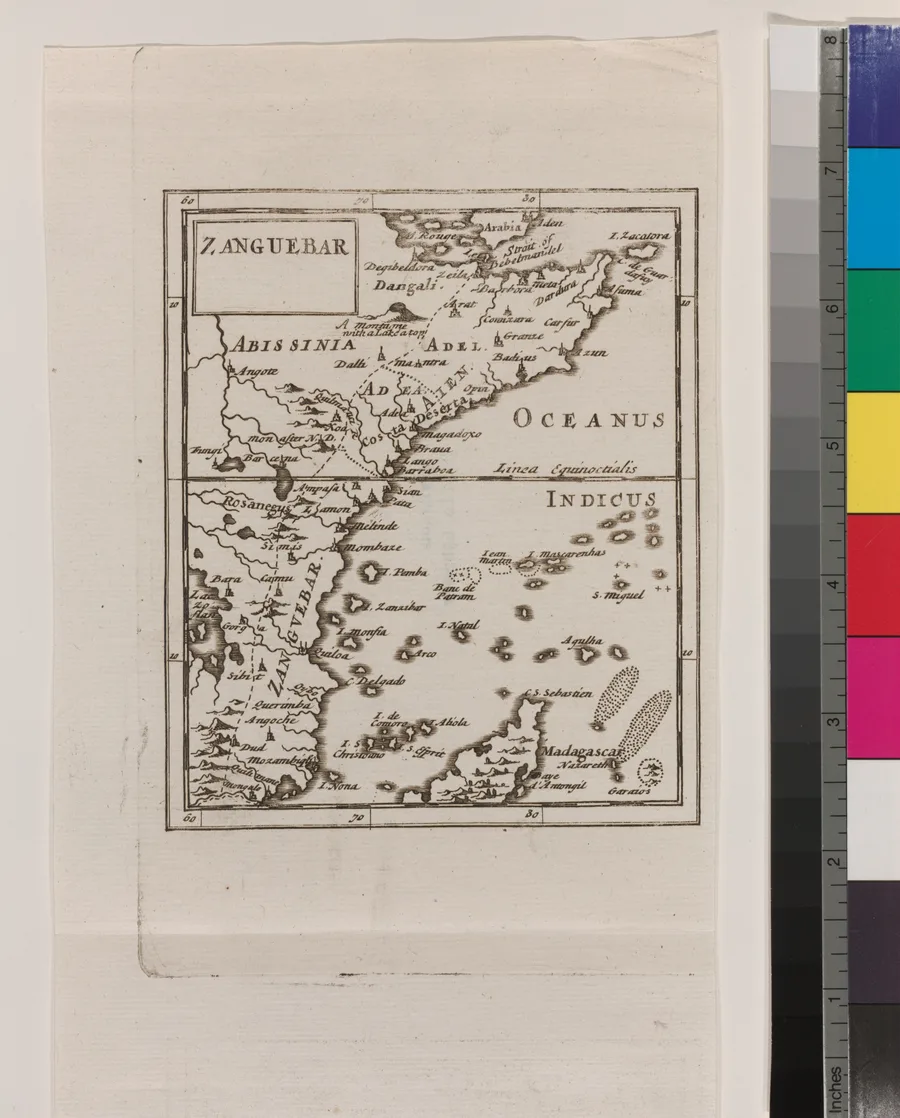
The Swahili coast is a stretch of East African shoreline running from Somalia through Kenya and Tanzania to Mozambique, home to the Swahili people and a chain of historic trading city-states including Mombasa, Malindi, Lamu, Zanzibar, and Kilwa. “Swahili” itself derives from the Arabic sawahil, “coasts,” but the culture it names is distinctly African: Swahili civilization formed from a documented mix of African Bantu and Arab origins, producing a unique language, religion, and urban culture found nowhere else in the world, described in historical sources including the ancient Greek Periplus of the Erythraean Sea and the writings of Ibn Battuta, who traveled the coast in person in the 14th century.
Monsoon Trade and City-States
Swahili coastal prosperity was built on Indian Ocean trade powered by predictable seasonal monsoon winds, which let sailing ships travel reliably between East Africa, Arabia, India, and beyond — a maritime trading tradition that predates European arrival in the Indian Ocean by many centuries. By the 10th century, Somali communities had settled the northern Swahili coast, and Bantu migration into the region layered in further linguistic and cultural connections to the African interior, evidenced archaeologically by pottery styles shared between coastal and inland sites. At its height in the 15th century, the Kilwa Sultanate — one of the wealthiest and most powerful Swahili city-states — claimed overlordship over a network of mainland and island trading centers stretching from Malindi and Sofala to Zanzibar, Mombasa, Pemba, and the Comoros, a maritime trading empire built and governed entirely by East Africans.
Portuguese Disruption and Legacy
This African-governed trading system was disrupted from outside beginning in 1498, when Vasco da Gama’s voyage around the Cape of Good Hope brought Portugal into direct competition with the Swahili coast’s existing trade networks; Portugal seized control of Mozambique Island and the port of Sofala in the early 16th century, redirecting trade that Swahili merchants and rulers had controlled for centuries. The Swahili language, now spoken by an estimated 40 to 200 million native and second-language speakers across East Africa, and the distinct architectural, religious, and cultural traditions the Swahili coast produced remain a living legacy of thriving East African maritime commerce that predates and does not depend on European contact for its significance.
Related entries
More in Business