The Pan-Africanism Movement
worldwide intellectual movement that aims to encourage and strengthen bonds of solidarity between all people of African descent
Overview
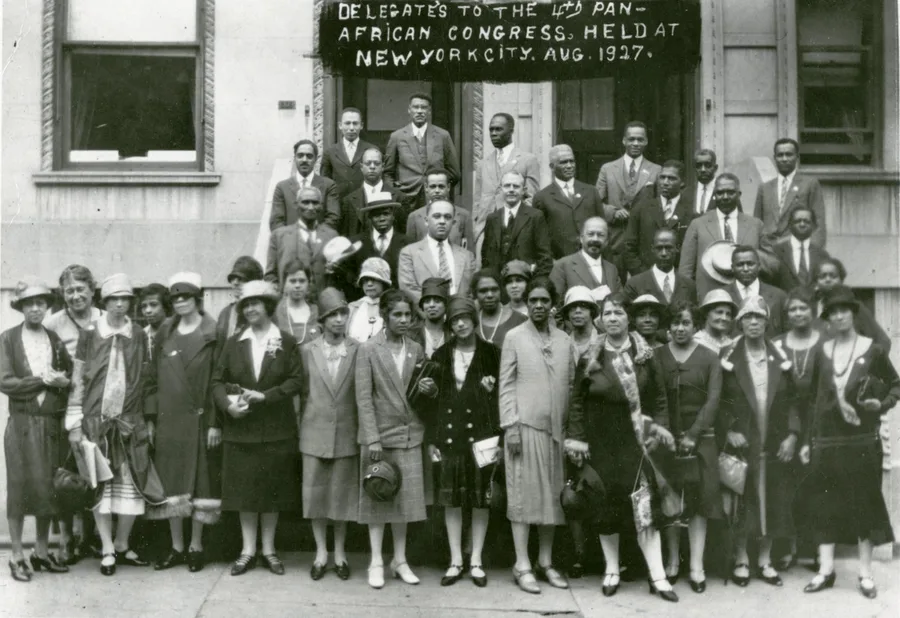
Pan-Africanism is a movement and body of political thought aimed at strengthening solidarity among all people of African descent, on the continent and across the global diaspora, built on the belief that African peoples share not merely a common history but a common destiny. Though its intellectual roots run deeper, Pan-Africanism emerged as an organized political movement in the 20th century, led initially by diaspora activists: the Trinidadian barrister Henry Sylvester Williams organized the first Pan-African Conference in London in 1900, explicitly to protest colonial land seizure and racial discrimination and to advocate for the interests of Black people worldwide.
A Movement of Global Reach
Pan-Africanism drew together an extraordinary range of leaders and thinkers across the diaspora and continent — this site profiles W.E.B. Du Bois directly, a foundational Pan-African intellectual and organizer, alongside a movement whose broader roster of advocates spanned continental African independence leaders including Kwame Nkrumah, Julius Nyerere, and Patrice Lumumba, Haitian revolutionary figures including Toussaint Louverture, and diaspora organizers including Marcus Garvey and Malcolm X. This site deliberately favors imagery and figures documenting this organized, diaspora-wide political and intellectual solidarity movement rather than any colonial-era imagery of Africa, consistent with Pan-Africanism’s own explicit rejection of colonial framing.
A Philosophy, Not Just a Movement
Pan-Africanists have generally championed continental solidarity and self-reliance as the path to Africa fulfilling its own potential, viewing an all-African alliance as a way to empower African people globally and, in the words of Pan-African scholarship, force a “reallocation of global resources” alongside a broader political and psychological assertion of African agency worldwide. Critics have raised real concerns about the ideology’s tendency to homogenize the vastly different experiences of African-descended peoples across dozens of countries and diaspora communities, and about the practical difficulty of reconciling this vision with the real political divisions that exist both within African nations and across the diaspora — a tension this site notes as part of Pan-Africanism’s genuine intellectual debate rather than glossing over it.
Legacy
Pan-African political thought had concrete institutional impact: it directly influenced the 1963 founding of the Organisation of African Unity, since succeeded by the African Union, headquartered in Addis Ababa with its Pan-African Parliament seated in Midrand, South Africa — continent-spanning institutions built directly on the diaspora-originated political vision Pan-Africanism first articulated. As a framework insisting that African and diaspora peoples share a common destiny worth organizing around collectively, Pan-Africanism remains a living political and cultural force connecting the pre-colonial African societies profiled elsewhere on this site to the ongoing story of the African diaspora today.
Related entries
More in Civil Rights, Politics