The Harlem Renaissance
African-American cultural movement in New York City in the 1920s
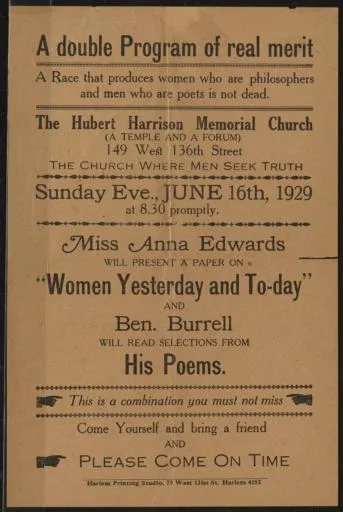
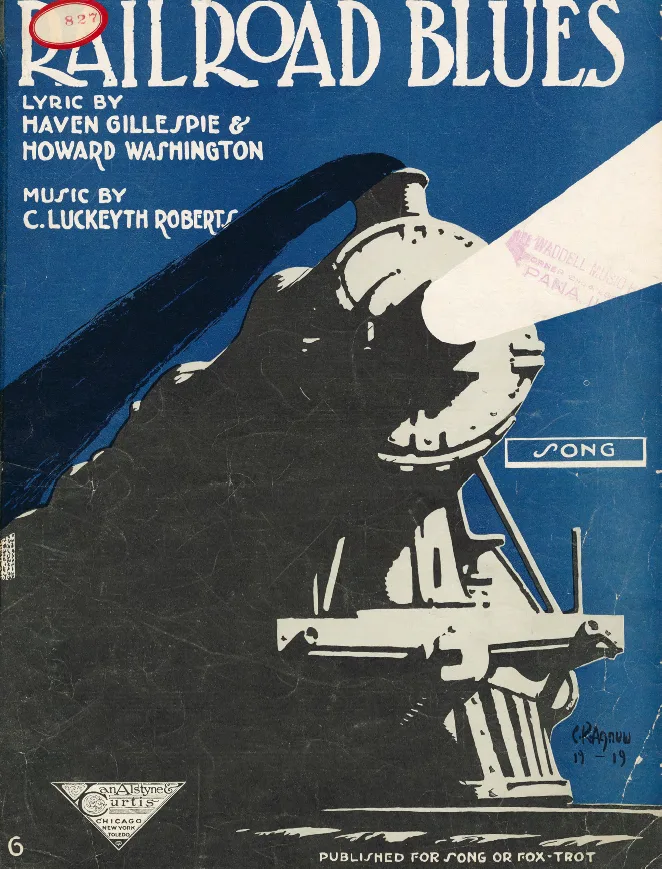
Overview
The Harlem Renaissance was a flowering of African American music, art, literature, theater, dance, and scholarship centered in Harlem, New York City, through the 1920s and into the early 1930s — at the time known as the “New Negro Movement,” a name drawn from philosopher Alain Locke’s landmark 1925 anthology The New Negro. Locke is regarded as the movement’s “dean,” and the Renaissance emerged directly from the demographic and cultural transformation the Great Migration produced, as African Americans fleeing the Jim Crow South, alongside Black immigrants from the Caribbean, converged on Harlem and built a new, self-consciously modern Black cultural capital.
A Generation Shaped by Reconstruction’s Promise and Loss
The movement’s roots reach back to 1865: the generation that built the Harlem Renaissance had direct memories, often through parents or grandparents, of both the achievements and the betrayals of Reconstruction, and many carried family investments in education their formerly enslaved or newly free ancestors had fought hard to secure. Most of the era’s leading figures arrived in Harlem as part of the wider Great Migration out of the Jim Crow South, joined by immigrants from racially stratified Caribbean societies, all converging on a neighborhood that had originally been developed as an elite 19th-century suburb before becoming, through this convergence, the self-conscious capital of a new Black cultural identity.
A Creative Crucible
Writer James Weldon Johnson called the movement’s peak a “flowering of Negro literature,” generally dated from 1924 — when the journal Opportunity: A Journal of Negro Life hosted a landmark gathering connecting Black writers with white publishers — through 1929, when the stock market crash and Great Depression began to draw the era to a close. This site profiles many of the individual figures who defined this creative explosion directly, including Langston Hughes, Zora Neale Hurston, Duke Ellington, Bessie Smith, Josephine Baker, W.E.B. Du Bois, Countee Cullen, Augusta Savage, and Paul Robeson, alongside landmark institutions of the era like the Apollo Theater and the Schomburg Center.
Legacy
Though geographically centered on Harlem, the movement’s influence extended well beyond it: Francophone Black writers living in Paris drew directly on the Harlem Renaissance’s ideas and energy, connecting it to the wider Négritude movement covered elsewhere on this site, and the Renaissance is credited with establishing African American art-making as a serious subject within — and eventually institutionalized inside — museums and cultural institutions that had previously excluded it entirely. The Harlem Renaissance remains the single most influential Black American cultural movement of the early 20th century, a direct, self-built demonstration of the artistic and intellectual power the Great Migration’s new urban communities unlocked.
Related entries
More in Arts, Literature, Music