1954–1968
The Civil Rights Movement
1954–1968 U.S. nonviolent social movement
Overview
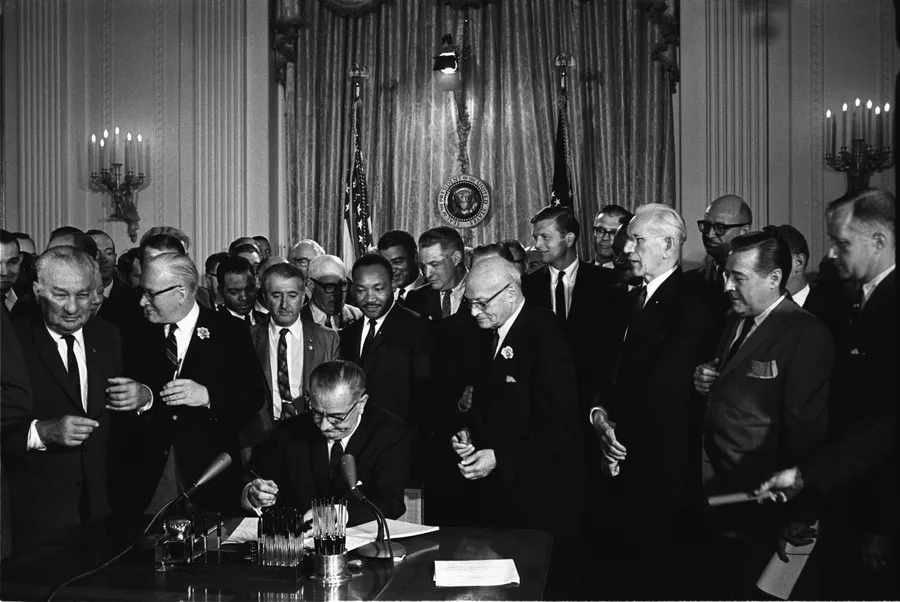
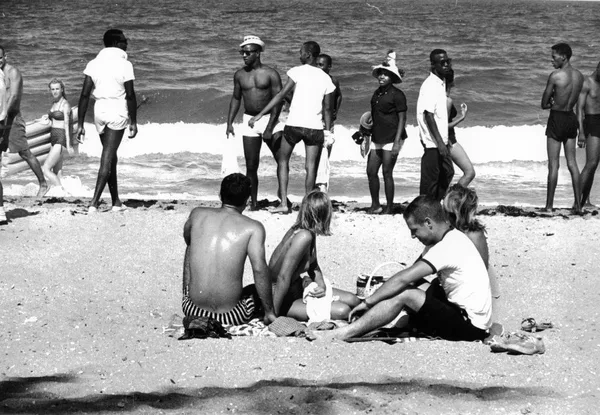
The Civil Rights Movement was a sustained, organized American social movement, generally dated 1954 to 1968, that dismantled legalized racial segregation and secured landmark new federal protections against racial discrimination and disenfranchisement — the most consequential period of civil rights advancement in the United States since Reconstruction, which this site documents as one of its direct historical roots. The movement built on decades of Jim Crow-era NAACP organizing and legal strategy, and its opening legal victory came in 1954, when the Supreme Court’s Brown v. Board of Education decision struck down state-mandated school segregation.
Nonviolent Direct Action
The movement’s core strategy combined nonviolent protest and civil disobedience with sustained legal pressure: the Montgomery Bus Boycott of 1955–1956, the Greensboro and Nashville sit-ins of 1960, the 1963 Birmingham campaign and its Children’s Crusade, and the 1965 Selma-to-Montgomery march each forced national attention onto segregation’s daily violence and injustice, amplified by press coverage of events including the 1955 lynching of Emmett Till and the use of fire hoses and police dogs against child protesters in Birmingham. This site profiles many of the individuals who led this strategy directly, including Martin Luther King Jr., Rosa Parks, Thurgood Marshall, Fannie Lou Hamer, and Bayard Rustin, whose work culminated in the roughly 250,000-person March on Washington in August 1963.
Legislative Victory
That sustained pressure produced three landmark federal laws in a five-year span: the Civil Rights Act of 1964, banning discrimination in public accommodations and employment; the Voting Rights Act of 1965, outlawing discriminatory voting practices and authorizing federal oversight of election law in areas with histories of voter suppression; and the Fair Housing Act of 1968, banning housing discrimination — alongside Supreme Court rulings including Browder v. Gayle (1956), which struck down bus segregation, and Loving v. Virginia (1967), which struck down laws banning interracial marriage.
Legacy
These laws ended most legal, state-sanctioned discrimination against African Americans in the United States, though informal racism persisted well beyond them. In the mid-1960s, the Black Power movement, covered on its own page on this site, emerged partly in critique of the mainstream movement’s more moderate, incremental strategy, shaped significantly by Malcolm X and the Black Panther Party, and civil unrest in Black urban communities between 1964 and 1969 — peaking after King’s 1968 assassination — reflected the real limits of what legislative victory alone had achieved for many Black Americans still facing poverty and segregation in practice.
Related entries
More in Civil Rights, Politics